From Collaboration to Innovation: Syxis Gathered Europe’s Built Environment Community in Vilnius
Bringing Together the European Built Environment Community
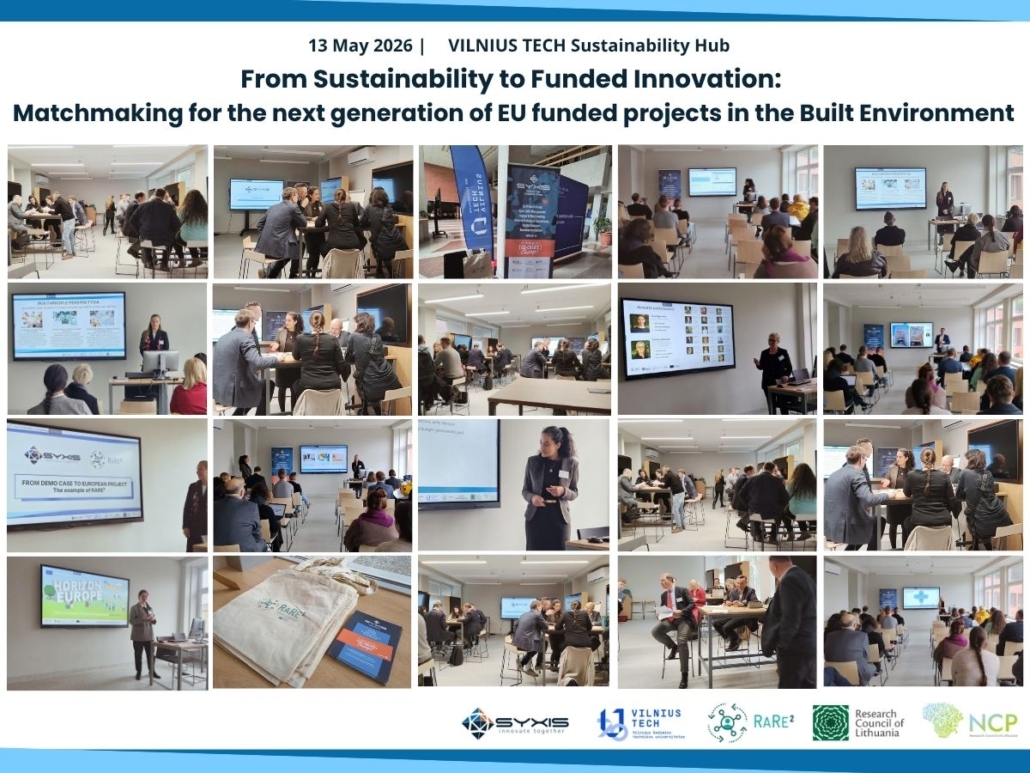
On 13 May 2026, the VILNIUS TECH Sustainability Hub hosted the international conference “From Sustainability to Funded Innovation”, an event organised by the Built4People Innovation Cluster Syxis together with its co-organisers and ecosystem partners, including VILNIUS TECH Sustainability Hub, NCP and Research Council of Lithuania.
The event created a collaborative space where academia, industry, innovation actors and institutional representatives could exchange perspectives on the future of sustainable construction, exploring how shared expertise and cross-sector cooperation can generate concrete pathways toward European innovation initiatives.
Syxis’ Vision: Connecting People, Ideas and Innovation
As an innovation hub active within the European built environment landscape and part of the Built4People Innovation Cluster activities, Syxis designed the event with the objective of strengthening engagement, collaboration and co-creation among stakeholders working on sustainability and innovation. The conference reflected the organisation’s broader mission of connecting people, competences and ideas in order to support transformative pathways capable of shaping a more sustainable future for the sector.
Rather than focusing only on funding opportunities, the event aimed to showcase how effective collaboration ecosystems are created in practice. Through interactive sessions, networking activities and project-oriented discussions, participants explored the dynamics behind successful European partnerships, from consortium building and pilot development to knowledge exchange and stakeholder engagement.
Addressing the Challenges of the Built Environment Transition
Throughout the day, speakers addressed key challenges currently shaping the construction and built environment sectors, including sustainability transitions, circularity, digitalisation and resilience. Discussions highlighted how European frameworks such as Horizon Europe, Built4People and the New European Bauhaus continue to encourage integrated and multidisciplinary approaches to innovation.
Particular attention was given to the importance of pilot-driven methodologies and collaborative experimentation environments. Several presentations showcased how research organisations, companies and local actors can work together to test innovative solutions, validate technologies and accelerate the transition from ideas to scalable implementation scenarios.
The Role of Clusters and Collaborative Ecosystems
One of the central themes of the conference was the value of clusters and innovation communities in enabling meaningful cooperation across Europe. Drawing from experiences connected to the Built4People ecosystem, the event demonstrated how cluster-based collaboration can facilitate matchmaking, shared expertise, proposal development and the creation of long-term strategic partnerships.
The programme also included practical workshop activities focused on European call analysis and collaborative project-building exercises. Participants worked together to identify complementarities between organisations, discuss future pilot scenarios and explore concrete pathways for developing competitive Horizon Europe proposals.
Building the Future Through Engagement and Co-Creation
The Vilnius conference ultimately highlighted the growing importance of ecosystem-building within the European innovation landscape. By combining technical discussions, collaborative workshops and networking opportunities, the event reinforced the idea that the future of the built environment depends not only on technological advancement, but also on the capacity to create connected, engaged and interdisciplinary communities working toward shared sustainability goals.