From Collaboration to Innovation: Syxis Gathered Europe’s Built Environment Community in Vilnius

Bringing Together the European Built Environment Community

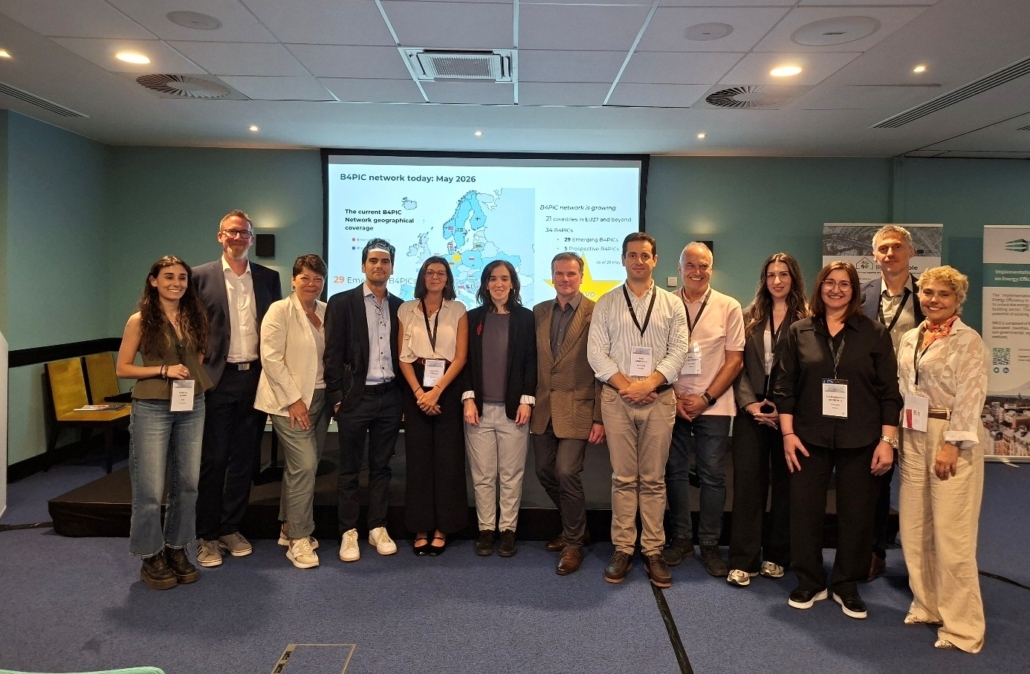
On 13 May 2026, the VILNIUS TECH Sustainability Hub hosted the international conference “From Sustainability to Funded Innovation”, an event organised by the Built4People Innovation Cluster Syxis together with its co-organisers and ecosystem partners, including VILNIUS TECH Sustainability Hub, NCP and Research Council of Lithuania.

The event created a collaborative space where academia, industry, innovation actors and institutional representatives could exchange perspectives on the future of sustainable construction, exploring how shared expertise and cross-sector cooperation can generate concrete pathways toward European innovation initiatives.

Syxis’ Vision: Connecting People, Ideas and Innovation

As an innovation hub active within the European built environment landscape and part of the Built4People Innovation Cluster activities, Syxis designed the event with the objective of strengthening engagement, collaboration and co-creation among stakeholders working on sustainability and innovation. The conference reflected the organisation’s broader mission of connecting people, competences and ideas in order to support transformative pathways capable of shaping a more sustainable future for the sector.

Rather than focusing only on funding opportunities, the event aimed to showcase how effective collaboration ecosystems are created in practice. Through interactive sessions, networking activities and project-oriented discussions, participants explored the dynamics behind successful European partnerships, from consortium building and pilot development to knowledge exchange and stakeholder engagement.

Addressing the Challenges of the Built Environment Transition

Throughout the day, speakers addressed key challenges currently shaping the construction and built environment sectors, including sustainability transitions, circularity, digitalisation and resilience. Discussions highlighted how European frameworks such as Horizon Europe, Built4People and the New European Bauhaus continue to encourage integrated and multidisciplinary approaches to innovation.

Particular attention was given to the importance of pilot-driven methodologies and collaborative experimentation environments. Several presentations showcased how research organisations, companies and local actors can work together to test innovative solutions, validate technologies and accelerate the transition from ideas to scalable implementation scenarios.

The Role of Clusters and Collaborative Ecosystems

One of the central themes of the conference was the value of clusters and innovation communities in enabling meaningful cooperation across Europe. Drawing from experiences connected to the Built4People ecosystem, the event demonstrated how cluster-based collaboration can facilitate matchmaking, shared expertise, proposal development and the creation of long-term strategic partnerships.

The programme also included practical workshop activities focused on European call analysis and collaborative project-building exercises. Participants worked together to identify complementarities between organisations, discuss future pilot scenarios and explore concrete pathways for developing competitive Horizon Europe proposals.

Building the Future Through Engagement and Co-Creation

The Vilnius conference ultimately highlighted the growing importance of ecosystem-building within the European innovation landscape. By combining technical discussions, collaborative workshops and networking opportunities, the event reinforced the idea that the future of the built environment depends not only on technological advancement, but also on the capacity to create connected, engaged and interdisciplinary communities working toward shared sustainability goals.

STAR*track general meeting advances collaboration and innovation in Bolzano

This week, STAR*track project partners gathered in Bolzano, Italy, for the project’s three-day bi-annual General Meeting.

Hosted by project partner, Eurac Research, at NOI Techpark, the meeting offered a chance for partners to collaborate, knowledge-share and progress plans to strengthen the Built4People Innovation Cluster (B4PIC) Network, with the collective aim of advancing sustainable and circular innovation across the European built environment.

As well as progress updates and key happenings from across the project, agenda highlights included:

Local Italian innovation

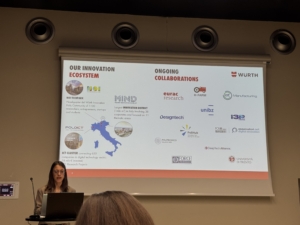
Chiara Dipasquale (Würth Italia) presenting their innovation startegy.

Partners enjoyed a comprehensive overview of the local Italian innovation ecosystem, with a spotlight on relevant case studies that highlight how collaboration between public/private stakeholders, alongside grants, technology transfer, and interdisciplinary platforms, can help drive sustainable advancements in the construction sector.

B4PIC best practices

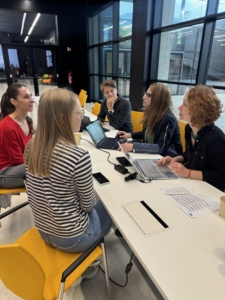
Project partners discussing B4PIC best practices in Bolzano Italy.

A roundtable session was held to discuss and identify Built4People Innovation Cluster (B4PIC) best practices and lessons learnt so far from STAR*track’s dedicated cluster maturation process.

These practices will be added to a special project booklet (watch this space for its release announcement!).

Site visit: Eurac Research’s laboratories

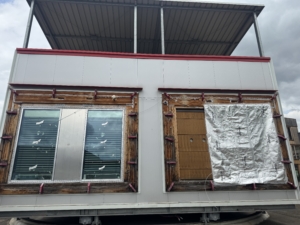
Eurac’s Façade System Interactions lab, in NOI Techpark, Bolzano, Italy.

Partners had the opportunity to visit Eurac Research’s laboratories, including the Façade System Interactions lab, where innovative building systems are tested to better understand how façade configurations influence energy performance, indoor environmental quality, and occupant comfort. Through real-scale testing and comparative analysis, the laboratory supports the optimisation of sustainable building solutions and demonstrates how research and innovation can help improve the performance and resilience of the built environment.

Workshop on replication

Partners discussed how the B4PIC Network could inspire the creation of other sustainable networks across the European Union (EU) and beyond, and goals for the B4PIC Network’s own sustainability.

Learn more about the Built4People Partnership and STAR*track project.

STAR*track convenes in Bolzano to further project’s sustainability goals

Today, STAR*track project partners are gathered in Bolzano, Italy, to mark the beginning of the project’s three-day bi-annual General Meeting, hosted by project partner, Eurac Research at NOI Techpark.

The first day of the project’s General Meeting was focused on a comprehensive overview of the local Italian innovation ecosystem.

Various workshops and discussions throughout the day aimed to shine a spotlight on relevant case studies that highlight how collaboration between public and private stakeholders, alongside grants, technology transfer, international networks, and interdisciplinary platforms, can drive sustainable advancements in the construction sector.

Key highlights from day one included:

  • Exploring South Tyrol’s innovation ecosystem and NOI Techpark’s role in supporting innovation, funding, and technology transfer.
  • Insights from IDM Südtirol on engaging companies and strengthening the construction sector.
  • Real experiences from regional & EU innovation ecosystems, including Habitech and the B4PIC Network.
  • Corporate perspectives from Würth Italia on innovation strategies and working with research & public funding.
  • Spotlight on STAR*track and the growing European B4PIC community.
  • Discovering the MetaBuilding digital ecosystem and cross-border Metacluster collaboration with project partners, ZAG and EURAC.
  • Inspiring case studies from various locally and EU-funded (Horizon Europe) companies, sharing lessons learned and replication potential.
  • A full day of knowledge exchange, collaboration, and forward-thinking ideas—showcasing how EU support and strong partnerships are shaping the future of construction

A week in Bolzano

Stay tuned for more updates from Bolzano this week, as project partners continue to discuss and plan how STAR*track can further help to deliver a future for Europe that is sustainable, beautiful, and inclusive, in alignment with the New European Bauhaus’ (NEB) values.

Learn more about STAR*track.

ECTP Conference 2026: preliminary programme released

 Built4People is delighted to announce that the European Construction and sustainable built environment Technology Platform (ECTP) has released a preliminary programme for its 2026 annual conference.

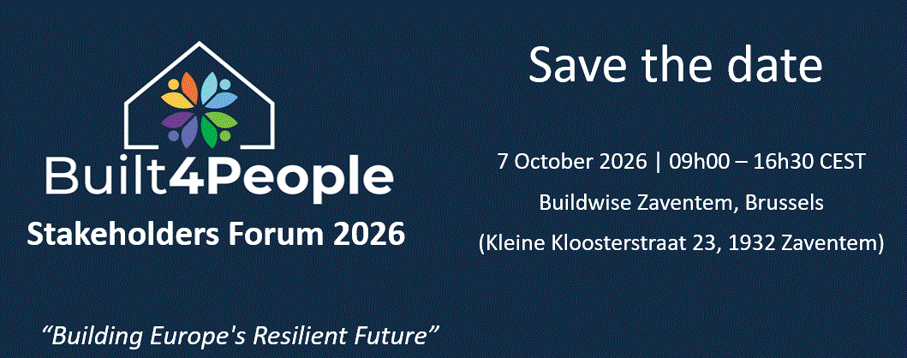
Taking place between 26–27 May 2026 at the Thon Hotel Bristol Stephanie in Brussels, Belgium, this year’s conference is entitled “Building Europe’s Competitiveness in the Built Environment: from Strategic Vision to Industrial Impact”.

The preliminary programme provides a first overview of the main sessions, topics and speakers, and reflects the three major priorities of this year’s event:

  • Looking towards a resilient, decarbonised, adaptive and regenerative built environment
  • How to create an enriching, inclusive and health-improving built environment
  • Examining a competitive, digitalised and circular value chain

The event will bring together key stakeholders from across the construction and built environment value chain to discuss future priorities in research and innovation, share the updated Position Papers of the ECTP Committees, and launch the discussions for the revision of the Strategic Research Agenda (SRIA).

Among the wide range of sessions covering key topics such as decarbonisation, circularity, digitalisation and innovation in the built environment, two sessions may be of particular interest for the Built4People community:

26 May (17:30–18:15) “History and state-of-play of the Built4People Innovation Clusters network (B4PIC network). Signing Ceremony of B4PIC Charters by new Emerging B4PICs”

Organised by the ECTP Secretariat and the Built4People Partnership management team.

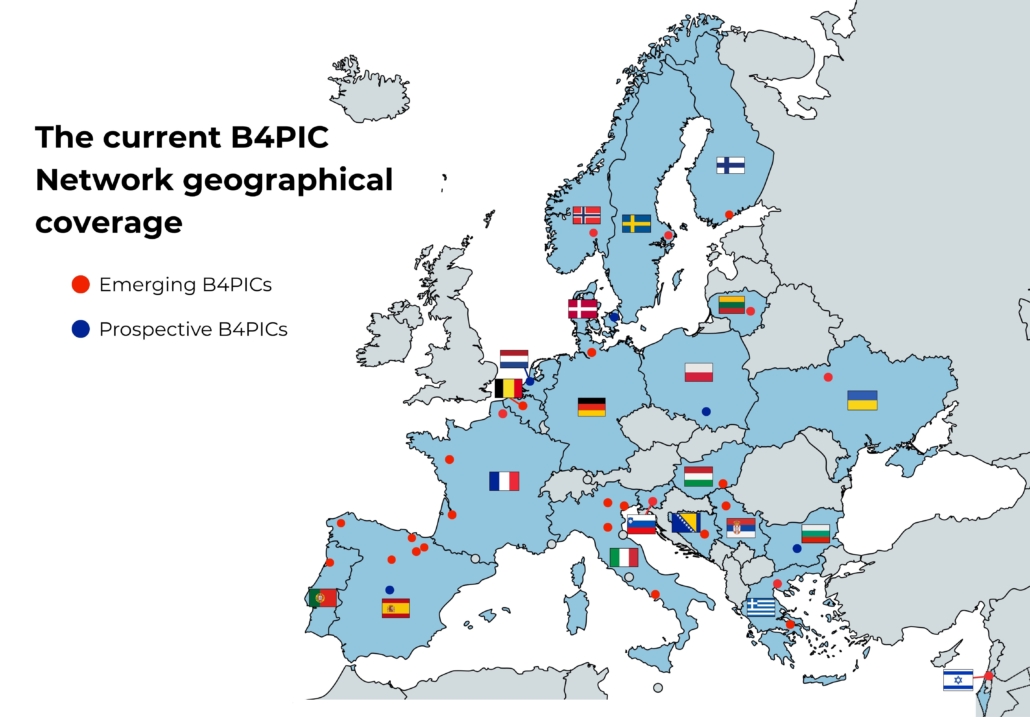
This session will provide a clear overview of what the Built4People Innovation Clusters (B4PICs) are and their role in strengthening innovation at national and regional levels. Participants will also learn about the current state of the network, which already brings together 34 Built4People Innovation Clusters from 21 different EU-countries, and beyond.

The session will be followed by a Signing Ceremony, during which prospective B4PICs will officially sign their B4PIC Charters, becoming Emerging Built4People Innovation Clusters and committing to the maturation process.

27 May (10:20–11:35) “NEB Facility: which achievements, which gaps?”

Organised by Dowel Innovation.

This session will focus on the New European Bauhaus (NEB) Facility and will provide an overview of the main achievements so far, as well as the existing gaps and future challenges. It will be particularly relevant for stakeholders involved in research, innovation and implementation activities linked to the built environment.

We invite you to explore the preliminary draft programme and secure your place at the Conference.

Early-bird registration is open until 31 March 2026, so make sure to register in time to benefit from the reduced rate.

In addition, ECTP members benefit from an extra 30% discount. If you are an ECTP member, please check your email inbox—a dedicated registration link with the member discount has already been sent.

Join ECTP and members of the B4P Network in Brussels to exchange ideas, strengthen collaboration and shape the future of the built environment in Europe.

WILSON – Distributed data modelling and Federated Digital Twinning for lifecycle data-driven sustainable operation and management of buildings and districts

About the Project:

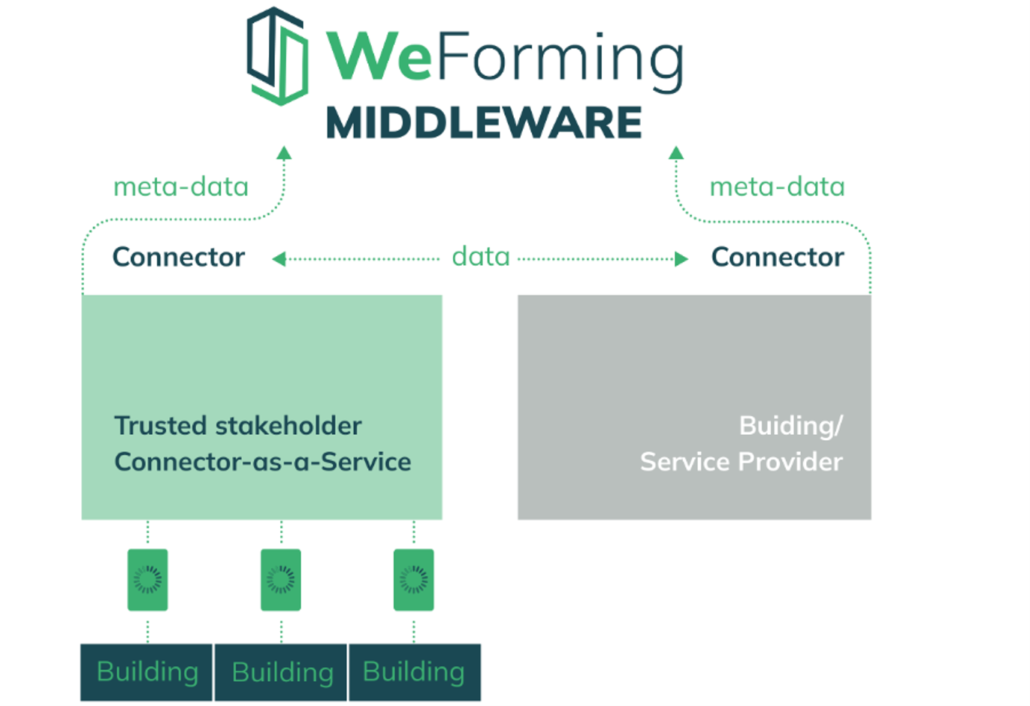
The built environment faces mounting pressures from climate change, resource scarcity, and the need for sustainable development across the full lifecycle of buildings. Yet, fragmented and siloed data within Building Management Systems (BMS) limits the effective use of lifecycle information for informed sustainability decision-making. WILSON addresses this challenge by introducing a transformative approach built on semantic data repositories, cognitive digital twins, and decentralised data management. Through a holistic and extensible data mesh architecture, the project ensures interoperability with existing proprietary BMS and Digital Twin systems while enabling improved building operations, environmental impact assessment, circularity evaluation, and advanced diagnostics. Central to this ecosystem are Personalised Building Data Hubs (PDHs), which apply International Data Space (IDS) principles to enable trusted data exchange and service transactions via a P2P marketplace.

Complementing these technological solutions, WILSON will deliver an Investment Tool providing stakeholders with detailed insights to guide decisions regarding building operation, renovation, and uptake of sustainable assets. To maximise its relevance and impact across Europe, the project’s integrated solutions will be validated in four large-scale pilots representing diverse contexts: a public district in Italy, a coastal hospital in Spain, an urban mixed district in the UK, and a rural residential area in Switzerland.

Press Release #7 – WILSON & UPSCALE Projects Announce Joint Workshop on Data Spaces for Construction

The WILSON and UPSCALE Projects will host the international “Data Spaces for Construction” workshop at TU/e on 21 May 2026, bringing together experts from research, industry, technology, and policy to advance interoperable, secure, and sovereign data sharing across the built environment. The event will explore essential components of construction-focused data spaces, such as reference architectures, governance and trust frameworks, semantic standards, and technical integration layers, through three parallel hands-on sessions covering business readiness, governance models, and scalable technical architectures. Concluding with a synthesis plenary, networking forum, and reception, the workshop aims to strengthen collaboration and shape a shared roadmap that accelerates the adoption of open, trustworthy, and interoperable data spaces, supporting Europe’s move toward more circular, digital, and climate‑neutral construction ecosystems.

For more information: https://wilson-project.eu/wilson-press-release-v7/

Recent Publications

WILSON’s latest publications showcase the project’s advancements in intelligent, interoperable, and sustainability‑driven solutions for the built environment. The first explores how adaptive and general‑purpose AI can better leverage complex building data to move beyond fixed-purpose automation. The second introduces a domain‑specific Vocabulary Hub that enhances semantic data exchange and interoperability across AECO data spaces. The third presents a hybrid assessment method for evaluating the impacts and benefits of nature‑based solutions in urban systems.

For more information: https://wilson-project.eu/publications/  

Innovation in action: strengthening climate resilience in Europe’s built environment

As climate risks intensify across Europe, improving the resilience of the built environment is becoming increasingly important. From extreme heat and flooding to other natural hazards, buildings, districts and urban systems must be better prepared to withstand and adapt to these challenges. 

Through its engagement with EU-funded projects, STAR*track is identifying and showcasing innovations that are being developed, tested and deployed across Europe.   

This article brings together a growing portfolio of climate resilience-focused solutions that aim to address the challenge from different angles, from digital planning systems to early warning protocols. 

Please note: This page will be updated regularly as additional projects and innovations are added.  

Featured climate resilience projects and innovations: 

Minority Report– Renovation Road Mapping Decision Support System (DSS) 

Innovation type: Software 

Innovation development status: Under development. TRL 6 

A digital renovation planning platform that: 

  • Helps planners, architects, engineers and building professionals plan and optimise renovations 
  • Supports climate resilience and energy efficiency improvements at the district scale 
  • Facilitates collaboration between multiple stakeholders involved in renovation planning 
  • Provides digital decision-support throughout the renovation process 

Learn more about Minority Report. 


MULTICARE – Flash-Flood Early Warning Protocol for Tecuci City 

Innovation Type: System / Technology 

Innovation Development Status:Under development – TRL 6–7, validated in a relevant environment at the Tecuci pilot site (Romania). 

A digital data driven early warning system that: 

  • Enhances preparedness and minimises the impact of flash flood risks 
  • Integrates real-time river and rainfall sensors with European weather models  
  • Uses AI-assisted hydrological and hydraulic forecasting to predict flood scenarios 
  • Provides automatic alerts and visual dashboards for city operators and first responders 
  • Is designed with a modular structure enabling replication in other European cities exposed to flood and climate hazards 

Learn more about MULTICARE. 


MULTICLIMACT  CREMA Tool (Climate Resilience Maturity Assessment) 

Innovation type: Software, System, Technology  

Innovation development status: Under development, TRL6-7  

A climate resilience assessment tool that: 

  • Conducts comprehensive risk and resilience assessments across various scales, including buildings, urban areas, and entire territories  
  • Empowers decision-makers to evaluate the resilience of assets including cultural heritage sites, urban sectors, and regional amenities  
  • Applies probabilistic and deterministic risk assessment methods to evaluate potential threats, asset characterisation, vulnerability, and impacts 
  • Generates resilience scores and calculates Expected Annual Loss before and after resilience measures 
  • Translates damage into monetary losses to support cost-benefit analysis and intervention planning 

Learn more about MULTICLIMACT. 


Next steps  

These innovations demonstrate how digital tools, early warning systems and decision-support platforms can strengthen climate resilience across Europe’s built environment, helping decision-makers better understand risks, plan effective interventions and protect communities. 

STAR*track will continue to engage with EU-funded projects and expand this overview, highlighting practical, market-ready solutions and real-world applications as they emerge and mature across Europe 

When the EDIH and B4PIC networks meet : Services that empower, networks that connect, actions that are co-created

Participants at the “When the EDIH and B4PIC Networks meet” 12 February, in Belgium.

Earlier this month, GreenWin and ECTP organised an event to bring together representatives from  European Digital Innovation Hubs (EDIHs), the Built4People Innovation Cluster (B4PIC) Network, European Union (EU) institutions and innovation stakeholders from across Europe.

The event provided a unique opportunity to exchange insights, explore collaboration mechanisms and co-create future joint actions to accelerate digital and sustainable transformation in the construction ecosystem.

Morning session: Networks, services and practical impact

The event opened with a welcome note from Gilles Colson, COO of GreenWin, and Anastasiya Yurchyshyna, Secretary General of ECTP, setting the scene for closer cooperation between digital innovation actors and the construction ecosystem.

Participants then received an overview of the EDIHs, presented by Gaspard Demur, Deputy Head of Unit ‘Artificial Intelligence (AI) Innovation and Policy Coordination’ at the EU AI Office, including its service offer and the growing role of AI as a strategic driver for competitiveness, resilience and innovation across sectors.

This was followed by a presentation of the B4PIC Network, delivered by Anastasiya Yurchyshyna, outlining its role within the Built4People (B4P) Partnership and its contribution to fostering innovation, collaboration and impact in the built environment.

Following this, the programme continued with the Thematic Working Group on Construction, presented by Stéphanie Roosa from EDIH Connect and Luigi Perissich from DIHCUBE. The session highlighted the main activities of the current eight construction EDIHs, their focus areas and key achievements in supporting digital transformation in construction.

Concrete implementation was at the centre of the following sessions:

  • Practical examples of EDIH services provision for companies, demonstrating hands-on support for small and medium enterprises (SMEs) and industry – presented by six different EDIHs: DIHCUBE (Italy), DIGITAL Built (Portugal), EDICS (Bulgaria), TKEDIH (Poland), EDIH-EBE (Belgium) and EDIH Connect (Belgium).
  • Practical examples of B4PIC activities, showcasing cluster-driven collaboration and innovation initiatives, delivered by SYXIS (Lithuania) and Construction City Cluster (Norway). Both B4PICs signed the B4P Innovation Cluster Charter later that afternoon and officially became Emerging B4PICs.

The morning concluded with a networking lunch and a visit to the Buildwise Demonstration Centre, where participants explored live demonstrations and continued informal exchanges.

Afternoon session: Co-Creating future actions

The afternoon shifted from information sharing to active collaboration.

A first session set the collaboration framework, introducing the participatory methodology used during the round tables and outlining the objectives for each working group. Short thematic pitches prepared participants for the collaborative discussions ahead.

The participatory round table workshops then focused on co-creating concrete future actions, fostering alignment between networks and identifying joint initiatives with tangible impact:

  • Positioning and collaboration around four upcoming EU calls, including two Built4People calls.
  • A potential joint presence at Smart City Expo World Congress (November 2026, Barcelona).
  • The DIHCUBE Launch Pad event—a matchmaking initiative designed to boost the exposure and growth of innovative solutions from selected EDIHs in the construction sector.
  • Project INTEGRATES – strengthening the pathway from project results to ecosystem uptake.
  • Strengthening synergies between digital collaboration platforms and the Digital Product Passport (DPP) to enhance integration, data exchange and ecosystem-wide uptake.

The day continued with insights into upcoming EU work programmes, helping participants to position themselves strategically for future funding and cooperation opportunities.

Celebrating B4PICs advancement within the network

A key highlight of the event was the signing ceremony of the Built4People Charter by two B4PICs; SYXIS and Construction City Cluster, marking an important step in strengthening the network and formalising their commitment to shared objectives as ‘Emerging’ B4PICs. You can read a full summary of the cluster charter signing here.

Overall, the meeting clearly demonstrated the shared ambition of Europe’s digital and construction communities: moving from exchange to structured cooperation, and from ideas to implementation.

B4PIC Network congratulates two new ‘Emerging’ clusters at special signing ceremony

The STAR*track Project and Built4People Partnership are pleased to announce that two Built4People Innovation Clusters (B4PICs) have changed their statuses from ‘Prospective’ to ‘Emerging’. 

A change in status 

On Thursday 12 February, Construction City Cluster (CCC) and SYXIS Innovative Together (SYXIS) officially advanced from ‘Prospective’ to ‘Emerging’ B4PIC status, following the signing of the B4PIC Charter by each cluster respectively at a dedicated ceremony, marking significant progression and development for both B4PICs, as well as an important step in strengthening collaboration and innovation across the Built4People Network. 

The Emerging B4PIC Network as of February 2026.

A special ceremony 

The signing ceremony took place during the cross-network collaborative event “When the EDIH and B4PIC Networks Meet”, held in Zaventem, Belgium. The event brought together representatives from European Digital Innovation Hubs (EDIHs), B4PICs and key industry stakeholders, fostering dialogue and cooperation across networks working towards a more sustainable and innovative built environment. 

What is a ‘B4PIC’? 

A B4PIC is a group of innovation-driven stakeholders from the built environment that engage in a tailored development and maturation process nurtured by the B4P Partnership. Via this process, each cluster aims to expand its geographical reach, cross-sector collaboration, and multidisciplinary expertise, ultimately enhancing the sustainability and impact of its members’ innovations whilst advancing through the network’s robust maturity process. 

About the clusters 

Construction City  

Construction City is a Norwegian innovation hub and physical meeting place for the construction, civil engineering and real estate sectors. It brings together companies, experts and startups to collaborate on innovation, sustainability and future-oriented solutions. Through co-working spaces, networking activities, events and shared facilities, Construction City strengthens cooperation and competitiveness across the built environment sector. 

Construction City Cluster presentation at the “When the EDIH and B4PIC Networks meet” event at Zaventem, Belgium.

SYXIS 

SYXIS is a Lithuanian non-profit innovation hub that connects small and medium enterprises (SMEs), research institutions and public organisations across Europe to drive digital transformation, sustainability and circular economy initiatives. It develops digital tools, fosters collaboration and supports the co-creation of sustainable solutions across sectors such as manufacturing and construction. 

SYXIS presentation at the “When the EDIH and B4PIC Networks meet” in Zaventem, Belgium.

Built4People warmly congratulates CCC and SYXIS on achieving Emerging B4PIC status and looks forward to their continued active contribution to the B4PIC Network. 

Learn more about the B4PIC Network

Innovation in action: advancing retrofit solutions for Europe’s built environment

Retrofitting Europe’s existing building stock is a critical priority for strengthening resilience and reducing emissions across the built environment. To achieve climate neutrality, Europe must prioritise deep, scalable renovation of existing buildings over new construction, delivering significant carbon savings in the process. This transition is enabled by emerging technologies, innovative business models, and collaboration across the sector.

Through its engagement with EU-funded projects, STAR*track is identifying and showcasing innovations that are being developed, tested and deployed across Europe.  

This article brings together a growing portfolio of retrofit-focused solutions that aim to address the challenge from different angles, from digital platforms to integrated renovation systems. 

Please note: This page will be updated regularly as additional projects and innovations are added. 

Featured retrofit projects and innovations

FORTESIE – FORTESIE Marketplace 

Innovation type: Software / system
Development status: On market / in use 

A collaborative digital platform that: 

  • Connects demand (building owners, public authorities) with supply (Energy Service Companies (ESCOs), companies and service providers) in energy renovation projects 
  • Showcases renovation products, services and complete packages 
  • Enables matchmaking, collaboration and partnership-building for public and private renovation projects 
  • Supports alternative financing and innovative business models
  • Boosts visibility for small and medium-sized enterprises (SMEs) and innovative providers across Europe 


Learn more about FORTESIE


HEART – Holistic Energy and Architectural Retrofit Toolkit 

Innovation type: System (integrated technological system combining material, software, and energy technologies)
Development status: Developed and tested in two pilot buildings (TRL 7) 

A systems and control driven retrofit toolkit that: 

  • Integrates building envelope, renewable energy, storage systems, and heating, ventilation and air conditioning (HVAC) in an interoperable system 
  • Uses a cloud-based decision support system (DSS) and building energy management system (BEMS) for predictive and adaptive control 
  • Reduces energy consumption, improves indoor comfort, and reduces installation time  
  • Supports deep renovation towards nearly Zero Eergy Building (nZEB) standards 

Learn more about HEART


RE-SKIN – RE-SKIN Renewable and Environmental-Sustainable Kit for Building Integration 

Innovation type: System (integrated circular renovation system combining materials, technologies, software, and processes)
Development status: Under development / Large-scale demonstration – Target TRL 7 by project end  

A circular, integrated renovation system that: 

  • Uses prefabricated, design-for-disassembly façades using bio-based and recycled materials 
  • Incorporates hybrid Building-Integrated Photovoltaic Thermal (BIPVT) roof systems combining photovoltaic and thermal energy 
  • Integrates envelope systems, hybrid renewables, smart HVAC, energy storage and electric vehicle charging with smart grid interaction 
  • Employs cloud-based life-cycle decision support and building energy management, to accelerate retrofit timelines and reduce life-cycle emissions


Learn more about RE-SKIN


Next steps 

These innovations demonstrate how digitalisation and integrated retrofit solutions can move renovation beyond isolated measures towards systemic transformation of Europe’s existing building stock. 

STAR*track will continue to engage with EU-funded projects and expand this overview, highlighting practical, market-ready solutions and real-world applications as they emerge and mature across Europe. 

Innovation in action across Europe’s built environment

Across Europe, EU-funded projects are developing a wide range of innovative tools, systems and technologies, with a view of  transforming the built environment.  

STAR*track is engaging with these projects to highlight and share the innovations that are emerging from their work. These innovations address challenges across the full building life cycle, from design and construction to renovation and operation. Together, they demonstrate how research and innovation are being translated into practical solutions with real-world relevance, aiming to contribute to decarbonisation and resilience. 

To support knowledge-sharing and collaboration, STAR*track has developed an overview document showcasing a selection of these emerging innovations. The document provides a snapshot of project developments and innovations, highlighting solutions that are already beginning to make an impact. 

Access the document here:  

Featured EU-funded projects 

The document currently highlights innovations from the following projects: 

Together, these projects reflect the diversity of innovation underway across Europe’s built environment, spanning different technologies, scales, and application contexts. 

Next steps 

The overview document marks the starting point of a broader knowledge-sharing effort. Over the coming months, STAR*track will explore these innovations in more depth through seven key themes that reflect major pathways for change in the built environment.  

These thematic deep dives will highlight how different solutions respond to shared challenges, and where there is potential for replication and scaling across Europe. 

By continuing to spotlight these innovations, STAR*track aims to support inter-project learning, strengthen connections between stakeholders, and help accelerate the uptake of solutions that can deliver meaningful environmental and societal benefits.