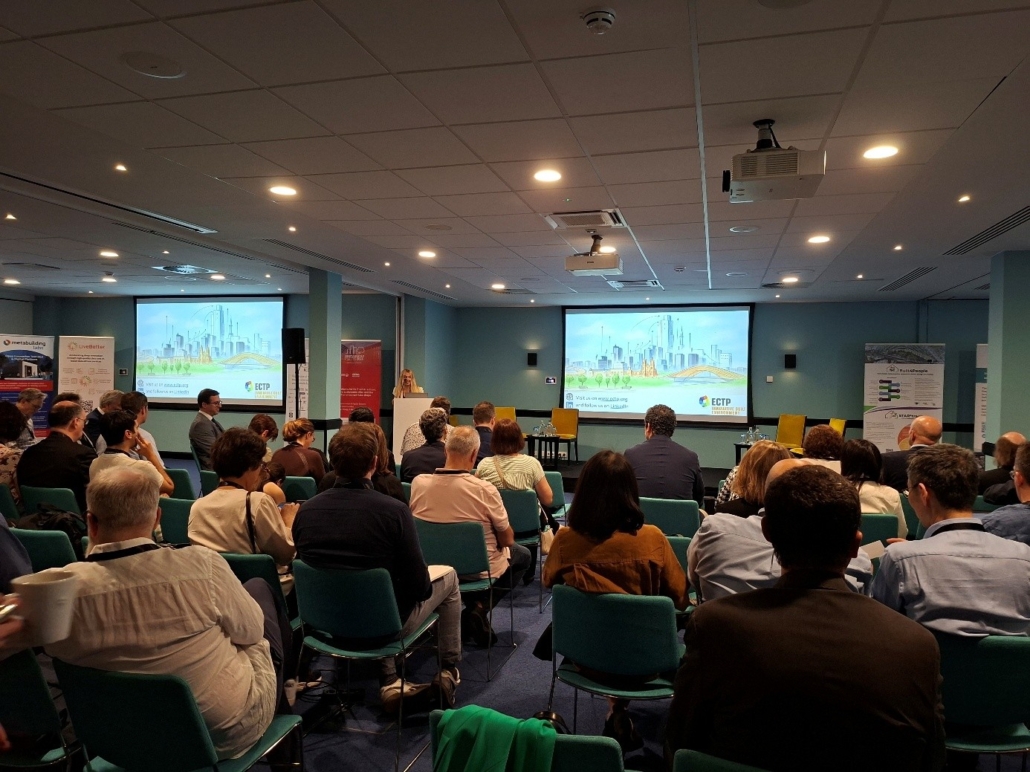
ECTP Conference 2026 in Brussels: advancing Europe’s competitiveness in the built environment
On 26–27 May 2026, the European Construction and sustainable built environment Technology Platform (ECTP) gathered in Brussels for its biannual conference under the motto “Building Europe’s competitiveness in the built environment: from strategic vision to industrial impact”.
The event brought together representatives from industry, research, policy and innovation communities across Europe to reflect on how the built environment sector can respond to today’s pressing challenges while strengthening Europe’s long-term competitiveness, sustainability and resilience.
Discussions throughout the conference highlighted the accelerating transformation of the sector, driven by the need to deliver climate-neutral, resource-efficient and people-centred solutions. A strong emphasis was placed on the role of research and innovation in bridging strategic European Union (EU) ambitions with real industrial deployment, ensuring that new knowledge and technologies translate into tangible impact across the entire value chain.
Keynote interventions set the tone for the discussions, addressing how cross-sectoral innovation can unlock new opportunities for the construction ecosystem. Topics included the potential of dual-use technologies and the growing importance of systems thinking to maximise value creation in the built environment.
Across the conference, participants explored how Europe can scale up digitalisation, artificial intelligence (AI) and data-driven approaches to improve decision-making, productivity and sustainability. From advanced modelling and real-time monitoring to emerging AI-enabled processes, the discussions reinforced the importance of interoperable data ecosystems and trustworthy digital frameworks to support the green and digital transition.
Circularity also emerged as a central theme, particularly in relation to the challenges of delivering affordable, resource-efficient housing. The need to integrate circular principles across the full lifecycle of buildings—while addressing regulatory, economic and operational barriers—was widely recognised as essential for achieving Europe’s climate objectives.
At the same time, innovation in construction processes and technologies was highlighted as a key driver for transformation, with a focus on automation, robotics, advanced design approaches and next-generation digital tools capable of improving safety, productivity and sustainability.
The conference also reinforced the importance of human-centric approaches, ensuring that innovation in the built environment contributes to inclusive, healthy and liveable spaces for all generations. This vision strongly aligns with the principles of the Built4People Partnership, which aims to catalyse the transition towards a sustainable, climate-neutral, smart and people-centric built environment.
Within this context, the role of collaboration across European initiatives and networks was clearly emphasised. The evolution of innovation ecosystems such as regional clusters and thematic partnerships demonstrated how coordination across scales—from the local to the European level—can accelerate the uptake of research results and strengthen the impact of innovation on the ground.
Finally, cultural heritage, regeneration, and emerging frameworks such as digital building logbooks and product passports were also recognised as important enablers of the sector’s transformation, highlighting the need for integrated approaches that combine policy, technology and market uptake.
Overall, the conference confirmed the growing momentum across Europe to align strategic research agendas with industrial needs and societal priorities. It was also reinforced by the role of ECTP and Built4People in shaping a coherent, impactful innovation ecosystem for the built environment—one that is capable of delivering on Europe’s ambitions for sustainability, competitiveness and quality of life.