Expanding the Built4People Innovation Clusters Network: three new B4PICs sign the charter at ECTP Conference 2026

One of the highlights of the ECTP Conference 2026, held in Brussels on 26–27 May, was the session dedicated to the evolution and future development of the Built4People Innovation Clusters (B4PIC)  Network.

The session showcased the progress achieved by the B4PIC Network in strengthening collaboration, accelerating innovation uptake and fostering regional engagement across Europe’s built environment ecosystem. By connecting research organisations, industry actors, public authorities and local stakeholders, B4PICs play a key role in translating European research and innovation results into tangible impact on the ground.

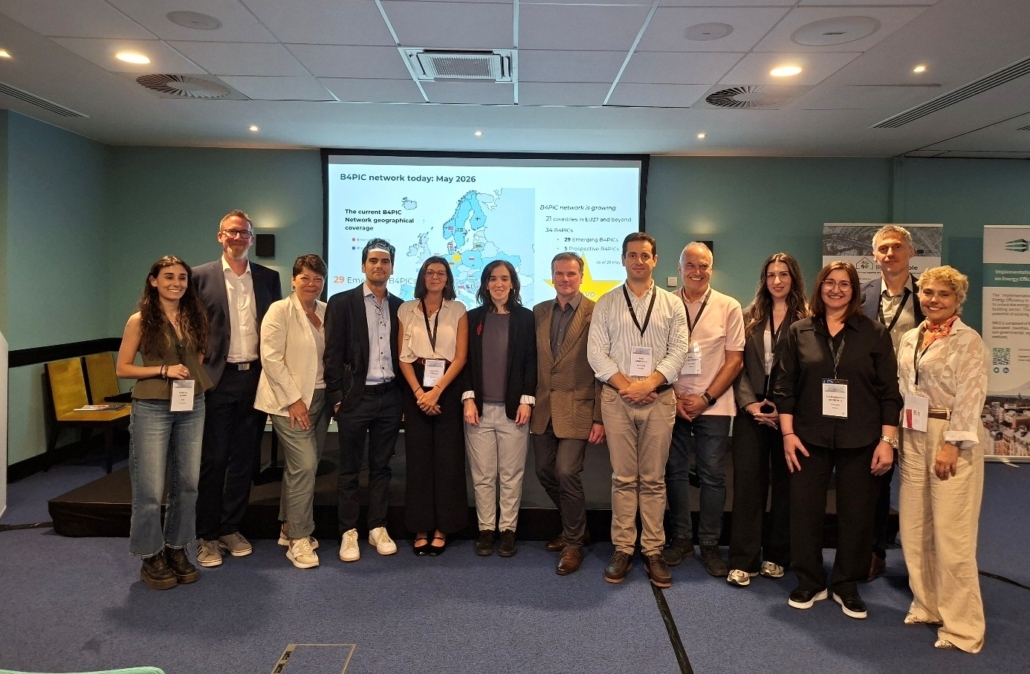
Opening the session, Anastasiya Yurchyshyna, Secretary General of ECTP, recalled the vision and objectives of the Built4People co-programmed partnership under Horizon Europe, highlighting its mission to accelerate the transition towards a sustainable, climate-neutral and people-centric built environment. She also presented the current state of the B4PIC Network, which today brings together 34 B4PICs from 21 countries across the EU and beyond. Of these, 26 had already achieved Emerging B4PIC status, while eight were recognised as Prospective B4PICs, demonstrating the growing interest in joining the network and contributing to its objectives.

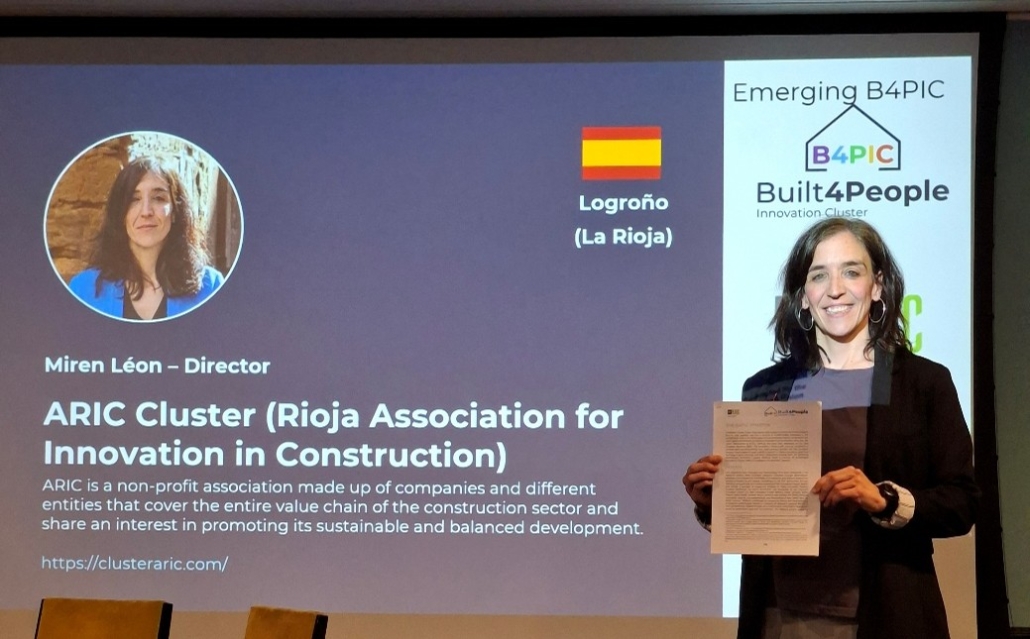
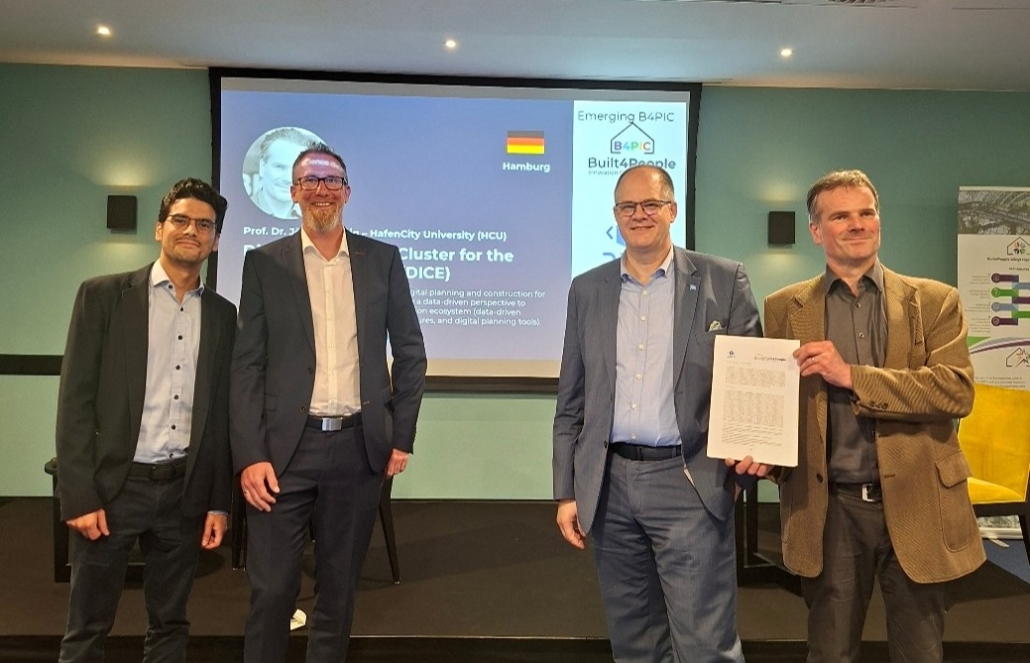
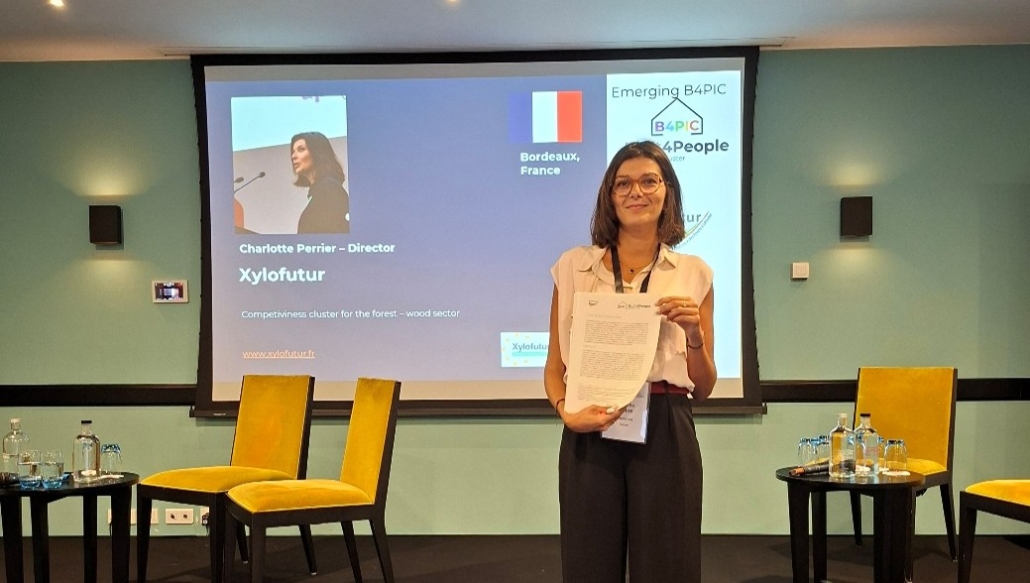
A key moment of the session was the B4PIC signing ceremony, during which three Prospective B4PICs officially signed their B4PIC Charters and became Emerging B4PICs:

  • ARIC Cluster (Rioja Association for Innovation in Construction): ARIC is a non-profit association made up of companies and different entities that cover the entire value chain of the construction sector and share an interest in promoting its sustainable and balanced development.

  • Digital Innovation Cluster for the Built Environment (DICE): DICE seeks to establish a value-chain of digital planning and construction for smart buildings and smart cities, and bring a data-driven perspective to B4PIC’s physical-built environment innovation ecosystem (data-driven design and engineering, wireless infrastructures, and digital planning tools).

  • Xylofutur: The national competitiveness cluster for the forest-wood-chemical sector in France, aims to develop the competitiveness of the sector through Research, Development and Innovation (RD&I) and to sustainably meet the needs of industry and society while preserving resources.

The signing marked an important milestone in the continued expansion of the network and reaffirmed the commitment of regional innovation ecosystems across Europe to support collaboration, knowledge exchange and innovation deployment in the built environment sector.

As the Built4People Partnership continues to mobilise stakeholders across the value chain, the growing B4PIC Network demonstrates the importance of place-based innovation ecosystems in bringing European research closer to markets, citizens and regions.

The ceremony also highlighted the increasing momentum behind the network and its contribution to amplifying the impact of both Built4People and ECTP activities, creating stronger links between European initiatives and regional implementation. With new members joining and existing clusters further strengthening their activities, the B4PIC Network continues to play a central role in ensuring that innovation reaches the local level and contributes to a more sustainable, resilient and people-centred built environment across Europe.

ECTP Conference 2026 in Brussels: advancing Europe’s competitiveness in the built environment

On 26–27 May 2026, the European Construction and sustainable built environment Technology Platform (ECTP) gathered in Brussels for its biannual conference under the motto “Building Europe’s competitiveness in the built environment: from strategic vision to industrial impact”. 

The event brought together representatives from industry, research, policy and innovation communities across Europe to reflect on how the built environment sector can respond to today’s pressing challenges while strengthening Europe’s long-term competitiveness, sustainability and resilience. 

Discussions throughout the conference highlighted the accelerating transformation of the sector, driven by the need to deliver climate-neutral, resource-efficient and people-centred solutions. A strong emphasis was placed on the role of research and innovation in bridging strategic European Union (EU) ambitions with real industrial deployment, ensuring that new knowledge and technologies translate into tangible impact across the entire value chain. 

Keynote interventions set the tone for the discussions, addressing how cross-sectoral innovation can unlock new opportunities for the construction ecosystem. Topics included the potential of dual-use technologies and the growing importance of systems thinking to maximise value creation in the built environment. 

Across the conference, participants explored how Europe can scale up digitalisation, artificial intelligence (AI) and data-driven approaches to improve decision-making, productivity and sustainability. From advanced modelling and real-time monitoring to emerging AI-enabled processes, the discussions reinforced the importance of interoperable data ecosystems and trustworthy digital frameworks to support the green and digital transition. 

Circularity also emerged as a central theme, particularly in relation to the challenges of delivering affordable, resource-efficient housing. The need to integrate circular principles across the full lifecycle of buildings—while addressing regulatory, economic and operational barriers—was widely recognised as essential for achieving Europe’s climate objectives. 

At the same time, innovation in construction processes and technologies was highlighted as a key driver for transformation, with a focus on automation, robotics, advanced design approaches and next-generation digital tools capable of improving safety, productivity and sustainability. 

The conference also reinforced the importance of human-centric approaches, ensuring that innovation in the built environment contributes to inclusive, healthy and liveable spaces for all generations. This vision strongly aligns with the principles of the Built4People Partnership, which aims to catalyse the transition towards a sustainable, climate-neutral, smart and people-centric built environment. 

Within this context, the role of collaboration across European initiatives and networks was clearly emphasised. The evolution of innovation ecosystems such as regional clusters and thematic partnerships demonstrated how coordination across scales—from the local to the European level—can accelerate the uptake of research results and strengthen the impact of innovation on the ground. 

Finally, cultural heritage, regeneration, and emerging frameworks such as digital building logbooks and product passports were also recognised as important enablers of the sector’s transformation, highlighting the need for integrated approaches that combine policy, technology and market uptake. 

Overall, the conference confirmed the growing momentum across Europe to align strategic research agendas with industrial needs and societal priorities. It was also reinforced by the role of ECTP and Built4People in shaping a coherent, impactful innovation ecosystem for the built environment—one that is capable of delivering on Europe’s ambitions for sustainability, competitiveness and quality of life. 


STAR*track general meeting advances collaboration and innovation in Bolzano

This week, STAR*track project partners gathered in Bolzano, Italy, for the project’s three-day bi-annual General Meeting.

Hosted by project partner, Eurac Research, at NOI Techpark, the meeting offered a chance for partners to collaborate, knowledge-share and progress plans to strengthen the Built4People Innovation Cluster (B4PIC) Network, with the collective aim of advancing sustainable and circular innovation across the European built environment.

As well as progress updates and key happenings from across the project, agenda highlights included:

Local Italian innovation

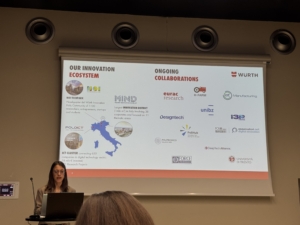
Chiara Dipasquale (Würth Italia) presenting their innovation startegy.

Partners enjoyed a comprehensive overview of the local Italian innovation ecosystem, with a spotlight on relevant case studies that highlight how collaboration between public/private stakeholders, alongside grants, technology transfer, and interdisciplinary platforms, can help drive sustainable advancements in the construction sector.

B4PIC best practices

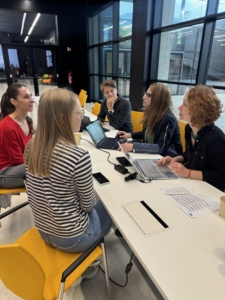
Project partners discussing B4PIC best practices in Bolzano Italy.

A roundtable session was held to discuss and identify Built4People Innovation Cluster (B4PIC) best practices and lessons learnt so far from STAR*track’s dedicated cluster maturation process.

These practices will be added to a special project booklet (watch this space for its release announcement!).

Site visit: Eurac Research’s laboratories

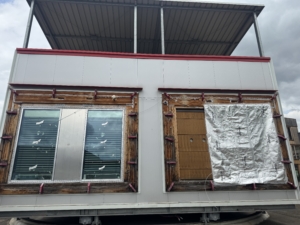
Eurac’s Façade System Interactions lab, in NOI Techpark, Bolzano, Italy.

Partners had the opportunity to visit Eurac Research’s laboratories, including the Façade System Interactions lab, where innovative building systems are tested to better understand how façade configurations influence energy performance, indoor environmental quality, and occupant comfort. Through real-scale testing and comparative analysis, the laboratory supports the optimisation of sustainable building solutions and demonstrates how research and innovation can help improve the performance and resilience of the built environment.

Workshop on replication

Partners discussed how the B4PIC Network could inspire the creation of other sustainable networks across the European Union (EU) and beyond, and goals for the B4PIC Network’s own sustainability.

Learn more about the Built4People Partnership and STAR*track project.

STAR*track convenes in Bolzano to further project’s sustainability goals

Today, STAR*track project partners are gathered in Bolzano, Italy, to mark the beginning of the project’s three-day bi-annual General Meeting, hosted by project partner, Eurac Research at NOI Techpark.

The first day of the project’s General Meeting was focused on a comprehensive overview of the local Italian innovation ecosystem.

Various workshops and discussions throughout the day aimed to shine a spotlight on relevant case studies that highlight how collaboration between public and private stakeholders, alongside grants, technology transfer, international networks, and interdisciplinary platforms, can drive sustainable advancements in the construction sector.

Key highlights from day one included:

  • Exploring South Tyrol’s innovation ecosystem and NOI Techpark’s role in supporting innovation, funding, and technology transfer.
  • Insights from IDM Südtirol on engaging companies and strengthening the construction sector.
  • Real experiences from regional & EU innovation ecosystems, including Habitech and the B4PIC Network.
  • Corporate perspectives from Würth Italia on innovation strategies and working with research & public funding.
  • Spotlight on STAR*track and the growing European B4PIC community.
  • Discovering the MetaBuilding digital ecosystem and cross-border Metacluster collaboration with project partners, ZAG and EURAC.
  • Inspiring case studies from various locally and EU-funded (Horizon Europe) companies, sharing lessons learned and replication potential.
  • A full day of knowledge exchange, collaboration, and forward-thinking ideas—showcasing how EU support and strong partnerships are shaping the future of construction

A week in Bolzano

Stay tuned for more updates from Bolzano this week, as project partners continue to discuss and plan how STAR*track can further help to deliver a future for Europe that is sustainable, beautiful, and inclusive, in alignment with the New European Bauhaus’ (NEB) values.

Learn more about STAR*track.

ECTP Conference 2026: preliminary programme released

 Built4People is delighted to announce that the European Construction and sustainable built environment Technology Platform (ECTP) has released a preliminary programme for its 2026 annual conference.

Taking place between 26–27 May 2026 at the Thon Hotel Bristol Stephanie in Brussels, Belgium, this year’s conference is entitled “Building Europe’s Competitiveness in the Built Environment: from Strategic Vision to Industrial Impact”.

The preliminary programme provides a first overview of the main sessions, topics and speakers, and reflects the three major priorities of this year’s event:

  • Looking towards a resilient, decarbonised, adaptive and regenerative built environment
  • How to create an enriching, inclusive and health-improving built environment
  • Examining a competitive, digitalised and circular value chain

The event will bring together key stakeholders from across the construction and built environment value chain to discuss future priorities in research and innovation, share the updated Position Papers of the ECTP Committees, and launch the discussions for the revision of the Strategic Research Agenda (SRIA).

Among the wide range of sessions covering key topics such as decarbonisation, circularity, digitalisation and innovation in the built environment, two sessions may be of particular interest for the Built4People community:

26 May (17:30–18:15) “History and state-of-play of the Built4People Innovation Clusters network (B4PIC network). Signing Ceremony of B4PIC Charters by new Emerging B4PICs”

Organised by the ECTP Secretariat and the Built4People Partnership management team.

This session will provide a clear overview of what the Built4People Innovation Clusters (B4PICs) are and their role in strengthening innovation at national and regional levels. Participants will also learn about the current state of the network, which already brings together 34 Built4People Innovation Clusters from 21 different EU-countries, and beyond.

The session will be followed by a Signing Ceremony, during which prospective B4PICs will officially sign their B4PIC Charters, becoming Emerging Built4People Innovation Clusters and committing to the maturation process.

27 May (10:20–11:35) “NEB Facility: which achievements, which gaps?”

Organised by Dowel Innovation.

This session will focus on the New European Bauhaus (NEB) Facility and will provide an overview of the main achievements so far, as well as the existing gaps and future challenges. It will be particularly relevant for stakeholders involved in research, innovation and implementation activities linked to the built environment.

We invite you to explore the preliminary draft programme and secure your place at the Conference.

Early-bird registration is open until 31 March 2026, so make sure to register in time to benefit from the reduced rate.

In addition, ECTP members benefit from an extra 30% discount. If you are an ECTP member, please check your email inbox—a dedicated registration link with the member discount has already been sent.

Join ECTP and members of the B4P Network in Brussels to exchange ideas, strengthen collaboration and shape the future of the built environment in Europe.

When the EDIH and B4PIC networks meet : Services that empower, networks that connect, actions that are co-created

Participants at the “When the EDIH and B4PIC Networks meet” 12 February, in Belgium.

Earlier this month, GreenWin and ECTP organised an event to bring together representatives from  European Digital Innovation Hubs (EDIHs), the Built4People Innovation Cluster (B4PIC) Network, European Union (EU) institutions and innovation stakeholders from across Europe.

The event provided a unique opportunity to exchange insights, explore collaboration mechanisms and co-create future joint actions to accelerate digital and sustainable transformation in the construction ecosystem.

Morning session: Networks, services and practical impact

The event opened with a welcome note from Gilles Colson, COO of GreenWin, and Anastasiya Yurchyshyna, Secretary General of ECTP, setting the scene for closer cooperation between digital innovation actors and the construction ecosystem.

Participants then received an overview of the EDIHs, presented by Gaspard Demur, Deputy Head of Unit ‘Artificial Intelligence (AI) Innovation and Policy Coordination’ at the EU AI Office, including its service offer and the growing role of AI as a strategic driver for competitiveness, resilience and innovation across sectors.

This was followed by a presentation of the B4PIC Network, delivered by Anastasiya Yurchyshyna, outlining its role within the Built4People (B4P) Partnership and its contribution to fostering innovation, collaboration and impact in the built environment.

Following this, the programme continued with the Thematic Working Group on Construction, presented by Stéphanie Roosa from EDIH Connect and Luigi Perissich from DIHCUBE. The session highlighted the main activities of the current eight construction EDIHs, their focus areas and key achievements in supporting digital transformation in construction.

Concrete implementation was at the centre of the following sessions:

  • Practical examples of EDIH services provision for companies, demonstrating hands-on support for small and medium enterprises (SMEs) and industry – presented by six different EDIHs: DIHCUBE (Italy), DIGITAL Built (Portugal), EDICS (Bulgaria), TKEDIH (Poland), EDIH-EBE (Belgium) and EDIH Connect (Belgium).
  • Practical examples of B4PIC activities, showcasing cluster-driven collaboration and innovation initiatives, delivered by SYXIS (Lithuania) and Construction City Cluster (Norway). Both B4PICs signed the B4P Innovation Cluster Charter later that afternoon and officially became Emerging B4PICs.

The morning concluded with a networking lunch and a visit to the Buildwise Demonstration Centre, where participants explored live demonstrations and continued informal exchanges.

Afternoon session: Co-Creating future actions

The afternoon shifted from information sharing to active collaboration.

A first session set the collaboration framework, introducing the participatory methodology used during the round tables and outlining the objectives for each working group. Short thematic pitches prepared participants for the collaborative discussions ahead.

The participatory round table workshops then focused on co-creating concrete future actions, fostering alignment between networks and identifying joint initiatives with tangible impact:

  • Positioning and collaboration around four upcoming EU calls, including two Built4People calls.
  • A potential joint presence at Smart City Expo World Congress (November 2026, Barcelona).
  • The DIHCUBE Launch Pad event—a matchmaking initiative designed to boost the exposure and growth of innovative solutions from selected EDIHs in the construction sector.
  • Project INTEGRATES – strengthening the pathway from project results to ecosystem uptake.
  • Strengthening synergies between digital collaboration platforms and the Digital Product Passport (DPP) to enhance integration, data exchange and ecosystem-wide uptake.

The day continued with insights into upcoming EU work programmes, helping participants to position themselves strategically for future funding and cooperation opportunities.

Celebrating B4PICs advancement within the network

A key highlight of the event was the signing ceremony of the Built4People Charter by two B4PICs; SYXIS and Construction City Cluster, marking an important step in strengthening the network and formalising their commitment to shared objectives as ‘Emerging’ B4PICs. You can read a full summary of the cluster charter signing here.

Overall, the meeting clearly demonstrated the shared ambition of Europe’s digital and construction communities: moving from exchange to structured cooperation, and from ideas to implementation.

Built4People projects clustering event

The Built4People Projects Clustering Event took place on 16 October 2025 in Brussels, Belgium. Organised by The European Climate, Infrastructure and Environment Executive Agency (CINEA), the European Commission, and ECTP in the context of the Built4People project STAR*track, this annual event brings together representatives from all projects funded under the Built4People calls. The aim of the event is to provide a valuable networking opportunity, foster knowledge exchange, and share lessons learned, challenges faced, and good practices developed across the Built4People (B4P) community. 

Attendees at the B4P Clustering Event 2025.

The event opened with welcoming remarks by Alain Zarli (Secretary General of ECTP), Mathieu Daloze (Policy Officer at DG ENER), and Annarita Ferreri (Head of Sector at CINEA).  

Following the opening, Mathieu Daloze offered an overview of the latest European policies related to the construction sector, highlighting the recent updates to the Energy Performance of Buildings Directive (EPBD), including National Building Renovation Plans, and initiatives under the Affordable Energy Action Plan such as the forthcoming Heating and Cooling Strategy, the Electrification Action Plan, and the Citizen Energy Package.  

Mathieu Daloze also shared insights on the Blueprint towards a decarbonised building stock by 2050, the current state of Cluster 5 (Climate, Energy and Mobility) and Work Programme 2025–2027, as well as early perspectives on the next Framework Programme 10 (FP10), which will continue to support partnerships in sustainable construction and energy efficiency under Pillar II.  

Mathieu Daloze (DG ENER) presenting an overview of the latest policy developments in the construction sector.

Annarita Ferreri presented the Built4People call statistics from 2021 to 2024, including projects funded under the 2024 call — FRAIMwork, SPHEERE, RADIANCE, ShieldBot, DTERBIM, INTEGRATES, CRedIBlE, Le Colaz, BLUEPRINT, and RenoVisor — some of which were supported through additional budget from the reserve list.  

Annarita Ferreri also introduced the upcoming call HORIZON-CL5-2026-02-D4, with a deadline of 17 February 2026, with three projects expected per topic. The presentation showed that EU contributions are fairly balanced between private-for-profit entities (33%) and research organisations (34%), with 40 ongoing projects, 639 participating organisations, and 27% of EU funding going to SMEs. As she noted, the high number of applications has led to a lower overall success rate in 2025. 

The next session, led by Alain Zarli, focused on the Built4People Partnership, providing an overview of its mission, general and specific objectives, as well as its KPIs and partner-specific impact pathways.  

Following this, Anastasiya Yurchyshyna, ECTP, presented the state of play and next steps of the B4PIC Network, which now includes participants from 21 countries across the EU27 and beyond, bringing together 34 Built4People Innovation Clusters (B4PICs)— 24 Emerging and 10 Prospective. 

 This growth reflects the outcomes of the B4P Charter Signature Ceremony, held on 15 October 2025 as part of the Built4People Stakeholders Forum, during which six new B4PICs signed their B4PIC Charters, officially becoming Emerging B4PICs and beginning their journey to implement their roadmaps and advance through the network’s maturity process. 

By signing the B4PIC Charter, clusters commit to progressing towards the required level of maturity over a specified timeline, developing their cluster status from ‘Emerging’ to ‘Prospective’ and then finally ‘Established’.  

Once the signed clusters have reached the highest level of defined maturity (by meeting at least two mandatory and one optional ‘success factors’), they will be regarded as an officially ‘Established’ cluster.  

The event continued with presentations from four mature projects funded under the 2021 and 2022 calls: FORTESIE, presented by Paraskevi Plagaki (European Dynamics); Herit4ages, by Carlos Ernesto Ochoa (IERC); RE-SKIN, by Fabrizio Leonforte (Politecnico di Milano); and WeForming, by Ângelo Casaleiro (R&D Nester), showcasing their achievements, challenges, and innovative solutions in the built environment sector. This was followed by presentations from four newly granted projects starting in 2025: CRedIBlE, introduced by Paris A. Fokaides (Euphyia Tech); INBLANC, by Andre van Delft (DEMO Consultants); Le’ Colaz, by Eleni Goni (E2ARC); and RADIANCE, by Gabriel Fontenla (Universidad de Vigo), highlighting the next wave of innovation and upcoming contributions to the Built4People Partnership. 

A dedicated break-out session on Challenges & Solutions on Data Collection, Integration & Interoperability, moderated by Olav Luyckx (CINEA), explored key issues and solutions across data management in Built4People projects. Participants discussed the types of data collected, ranging from building and energy consumption data, humidity, overused resources, and digital twin aspects to qualitative societal and life-cycle inventory data; and the challenges of collecting it in a useful, standardised, and confidential manner.  

Solutions included standardisation, using accessible data from other projects, and ensuring data security, with proposals for a European observatory and trustworthy servers. On data integration, challenges included difficulties with energy data, infrastructure, and using aggregated data from other EU projects. Solutions focused on secure sandboxes, minimum data standards, and potentially a joint data repository to enhance knowledge-sharing. Interoperability challenges highlighted differences in regulations, software, and platforms across countries, with open standards and protocols identified as key to overcoming these barriers.  

Challenges and solutions on data collection, integration & interoperability break out session taking place.

Finally, discussions emphasised the value of data for policy feedback, including input for the Smart Readiness Indicator testing phase in Member States and for local or regional roadmap development. Key takeaways included the need for standardisation and harmonisation, data security compliance, and the promotion of open standards and protocols to enhance interoperability. 

A second break-out session, Challenges & Solutions for Demo Buildings & Sites, moderated by Linda Novosadová (CINEA), focused on the technical, regulatory, financial, and social challenges of coordinating demo projects across different types of sites and regions.  

Participants highlighted difficulties such as the lack of clear guidelines for defining pilot projects, accessibility issues for people with disabilities, changes of ownership, permitting bottlenecks, legal barriers, certification processes, and skills gaps for innovative products.  

Solutions and good practices shared by the participants included implementing smaller demonstrators, ensuring transparency, applying risk management, involving building managers and owners, addressing privacy and insurance issues, and building trust with demo site responsible parties. Emphasis was also placed on the need for frameworks to define pilot projects, involving universal design experts, and maintaining proactive engagement with project officers.  

Key takeaways included the importance of clear guidelines, addressing accessibility, legal, and operational challenges, and adopting flexible, adaptive strategies to manage risks and ensure successful project implementation. 

The event concluded with Veronika Schröpfer (CINEA) presenting a synthesis of the break-out sessions, summarising the key challenges, solutions, and best practices discussed. Annarita Ferreri closed the event by thanking all participants for their presence and engagement, emphasising the importance of always seeing projects, maintaining ongoing dialogue between project officers and participants, and ensuring that feedback informs policy through evidence-based information. 

Built4People announces upcoming 2026 innovation and collaboration forum

The Built4People Partnership is pleased to announce an upcoming forum on digital innovation and collaborative construction networks, taking place at Buildwise in Zaventem, Belgium, on 12 February 2026.

“When the EDIG and B4PIC Networks Meet” is a free cross-network collaboration forum that will bring together European Digital Innovation Hubs (EDIHs), Built4People Innovation Clusters (B4PICs), and key industry stakeholders.

This highly participatory full-day forum is designed to go beyond networking — turning connections into practical, real-world action.

Morning forum sessions will feature the B4PIC Network Insights & Ecosystem Overview, including presentations from:

  • EDIHs: A European Commission (EC) representative will provide an overview of the network and its service offer across four pillars.
  • B4PIC Network: Representatives from the EC and ECTP will present the network’s structure and role within the Built4People (B4P) initiative.
  • Thematic Working Group on Construction: EDIH Connect and DIH Cube will highlight key members, focus areas, and achievements.

Participants will then explore practical examples of EDIH services for companies, followed by a networking lunch and special visit involving live demonstrations at Buildwise’s facilities.

The afternoon sessions will focus on collaboration and co-creation, including:

  • Plenary Session: An overview of the participatory process will be presented, highlighting cooperation opportunities such as EU funding calls and co-organised events, as well as expected outcomes for participants.
  • Participatory Round Tables: Parallel working groups will enable participants to co-design initiatives, including joint EU funding proposals, valorisation of digital tools and project outcomes, startup events, and joint presence at the Smart City World Expo Congress.

The forum will conclude with insights on future European Union (EU) work programs, culminating with networking and beer tasting in the evening!

Availability is limited, and attendance is free, so interested parties are encouraged to register as soon as possible in advance to secure their place at this unique European innovation forum.

Register for the forum and see the full agenda here.

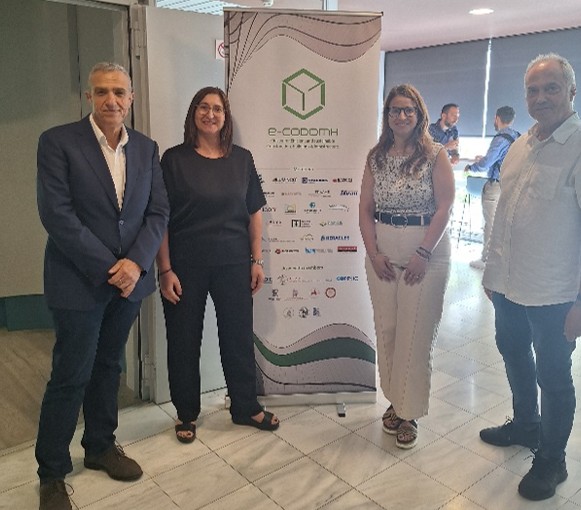
e-CODOMH B4PIC hosts first conference showcasing Greece’s momentum in sustainable construction

The first Conference of Built4People Innovation Cluster (B4PIC), e-CODOMH, was held on 11–12 November at the Demokritos Amphitheatre in Athens, Greece, marking an important milestone for Greece’s growing ecosystem in sustainable construction and industrial innovation.

Bringing industry and research together

Bringing together companies from across the construction and materials value chain, alongside universities, research centres and public bodies, the two-day event highlighted the transformation currently reshaping both the Greek and European built environment.

Conference attendees explored themes ranging from sustainable renovation and circularity to advanced manufacturing technologies and the use of digital tools in the construction sector. What set the conference apart, however, was its strong emphasis on uniting business and science in a format designed to foster real synergies—positioning e-CODOMH as an emerging hub of knowledge, research and production within Greece, and beyond.

Key messages from industry and experts

Built4People Innovation Cluster, e-CODOMH’s, presentation during the conference on 11 November at the Demokritos Amphitheatre in Athens, Greece.

Opening the event, e-CODOMH President, George Eliades, underscored the conference’s role as a space for connection and development, noting the cluster’s potential to accelerate innovation across the built environment.

Leading industrial players, including platinum sponsor Elval Colour and gold sponsors ALUMINCO and Ilicon, shared insights into their ongoing efforts to develop low-carbon materials and environmentally responsible products. Their contributions reflected a shared commitment to drive sustainable growth via collaboration and to support the market’s transition to cleaner, smarter building solutions.

Technology providers also played a central role at the conference, with companies such as Core Innovation Groups showcasing digital solutions powered by artificial intelligence. Their presence underscored how Industry 4.0 technologies are increasingly shaping manufacturing and construction processes in Greece.

The sustainability agenda was further strengthened by contributions from various national organisations and experts. Speakers from the Greek Sustainable Buildings Council and Knauf Insulation highlighted the need for continuous collaboration, emphasising the crucial role of advanced materials and design practices in decarbonising the built environment.

Understanding e-CODOMH

Beyond its technical discussions, the conference offered the broader market an opportunity to better understand e-CODOMH’s mission and evolution. Founded in 2021 to bridge businesses, academia and research, the B4PIC continues to support innovation and respond to the complex challenges of modern construction.

Hosting the event at Demokritos Amphitheatre symbolically reinforced this commitment, bringing together technology, science and industry under one roof.

Looking towards a sustainable future

As the event concluded, a clear message emerged: the technologies and solutions presented are not aspirations for the distant future—they are already shaping today’s market. Greece is not simply keeping pace with European developments; in many areas, it is taking a leading role.

With strong engagement and a shared vision across sectors, the success of the first e-CODOMH Conference sets the stage for continued collaboration and further advances in sustainable construction. The next steps are awaited with great interest across the industry.

Learn more about the B4PIC Network.

New European Bauhaus: become a member of the NEB junction stakeholder assembly

The call to constitute the New European Bauhaus (NEB) Junction Stakeholder Assembly is now open!

This assembly is designed as an inclusive space for public authorities, built-environment actors, cultural and creative professionals, civic organisations, researchers, community connectors, youth and emerging professionals, and many others who want to shape the future of the NEB in practice.

The NEB Junction Stakeholder Assembly aims to:

  • Connect local practices and experiments with the NEB Junction Hub
  • Assure that what works on the ground informs tools and policy
  • Help align different actors around shared priorities and next steps

It will produce recommendations that will be shared through the NEB Junction Hub, i.e., the web platform for disseminating NEB results.

You can find more information about the Assembly process and the application form here.