Innovation in action: Products and services for the re-use of building components and materials
How can Europe move from a linear construction model towards one where building materials and components remain in use for longer?
As the built environment faces growing pressure to reduce resource use, emissions and construction and demolition waste, circular approaches are creating new opportunities to reuse existing materials, design for future disassembly and make better-informed decisions about material use.
Through its engagement with EU-funded projects, STAR*track is identifying and showcasing innovations that are helping to put circular construction into practice across Europe.
This article brings together a selection of solutions addressing different parts of the circular value chain, from reclaimed materials and design-for-disassembly approaches to digital tools that assess building circularity.
Please note: This page will be updated regularly as additional projects and innovations are added.
Featured circular projects and innovations
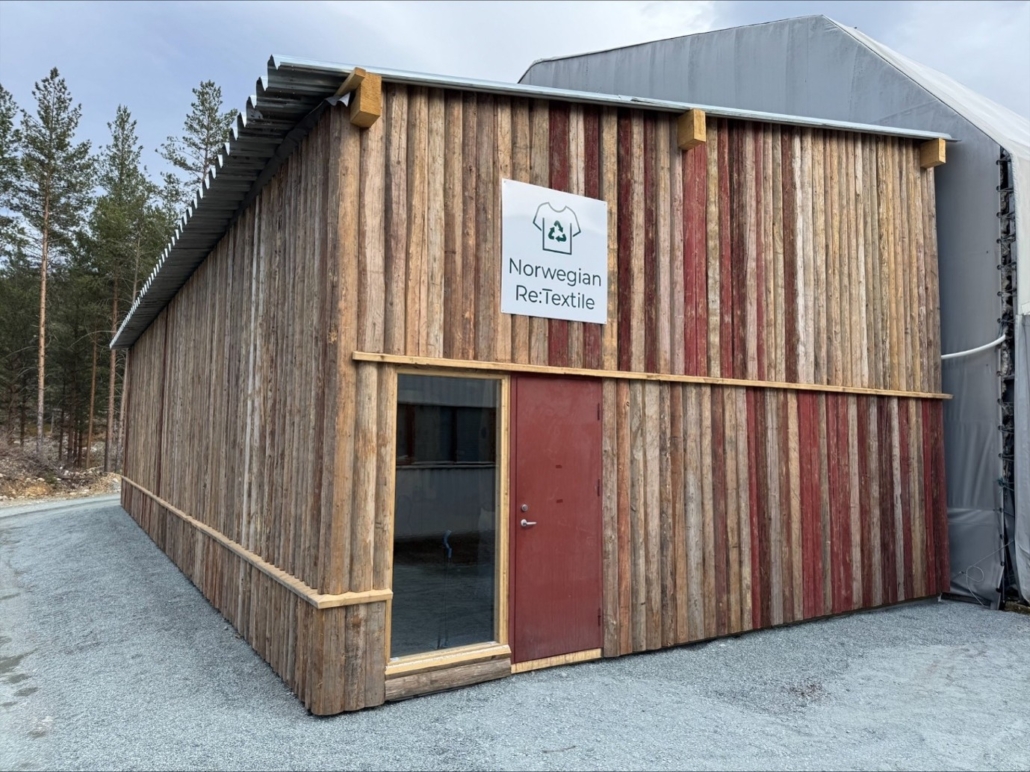
Drastic – “Re:Textile”, circular construction facility with reclaimed-timber structure
Innovation type: Material
Innovation development status: In use
A circular construction approach that:
- uses reclaimed structural timber, glulam (glued laminated timber), steel roof plates and insulation panels recovered from a decommissioned cryptomining warehouse
- demonstrates how reclaimed materials can be safely reused in structural and building applications, reducing demand for virgin materials
- reduces environmental impacts, with life cycle assessment (LCA) results showing reductions of 38–95% across categories such as climate change, acidification, and resource use compared with conventional construction using virgin materials
- demonstrates the potential for cost-efficient, scalable circular construction, including an estimated 8.6-tonne reduction in CO₂e emissions
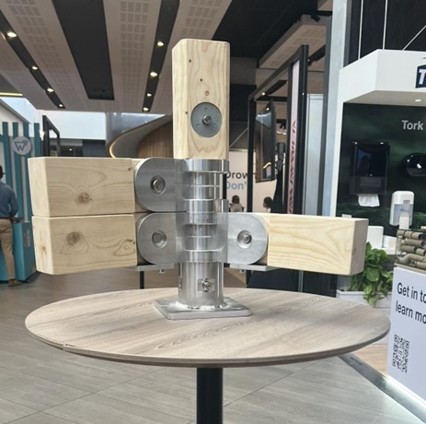
Drastic– DFAD™ circular building processes and C-Joint™ connectors
Innovation type: System
Innovation development status: Under development (TRL7)
A circular building system that:
- Enables buildings and building components to be assembled and disassembled easily and quickly, supporting reuse across multiple lifecycles
- Uses Design for Assembly and Disassembly (DFAD™) principles to create flexible, adaptable, reusable and scalable building structures
- Uses C-Joint™ connectors to create disassemblable structural frames across a range of shapes, building typologies and applications
- Supports faster construction and the development of local circular value chains by enabling components to be easily reused, reconfigured and repurposed
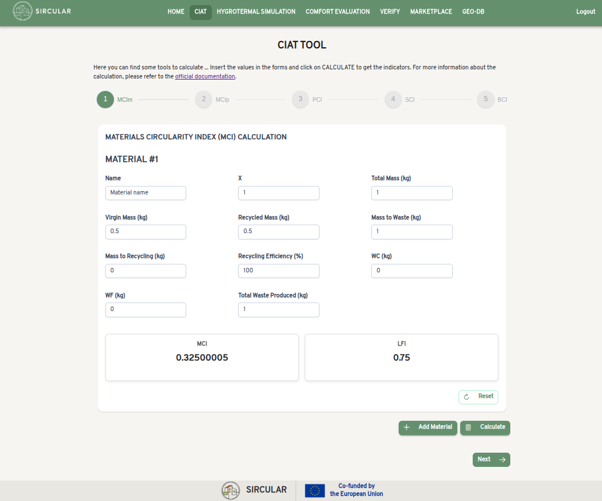
Sircular– CIAT – Circularity Index Assessment Tool for Buildings
Innovation type: Software / System / Technology (Digital Decision Support System for Circular Construction)
Innovation development status: Under development / Demonstration phase (Horizon Europe Innovation Action). The tool is being validated in real demonstration buildings within the SIRCULAR project (TRL expected: 6–7 by end of project – system demonstrated in relevant environment).
A digital decision-support tool that:
- uses Building Information Modelling (BIM) to assess the circularity and recyclability of buildings across their life cycle
- assesses factors including disassembly, material separation and end-of-life recycling
- integrates LCA and Life Cycle Costing (LCC) to support more informed design and investment decisions
- provides both advanced BIM-based and simplified versions, supporting use by technical and non-technical stakeholders
Next steps
These innovations demonstrate how circular value chains can be strengthened across different stages of the built environment lifecycle — from recovering and reusing existing materials, to designing buildings for future disassembly, and developing digital tools to measure and support circularity.
STAR*track will continue to engage with EU-funded projects and expand this overview, highlighting practical solutions and real-world applications that can help keep building materials and components in use for longer and support the transition towards a more circular built environment across Europe.