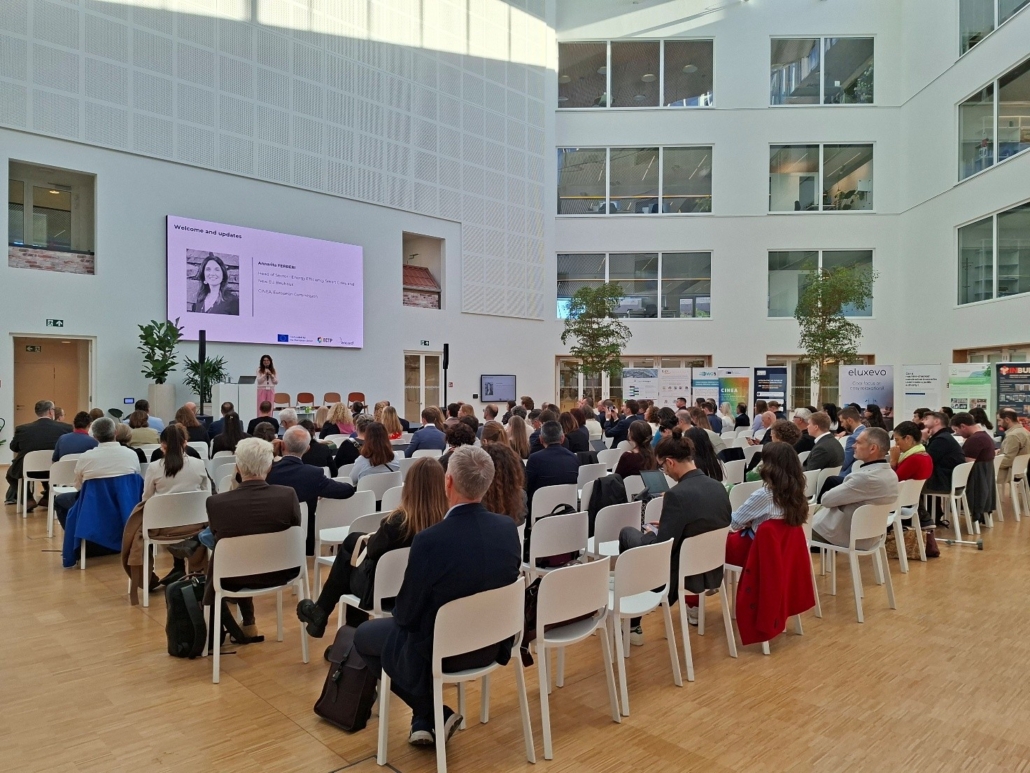
5th Built4People Stakeholders Forum: Building Europe’s Resilient Future
The 5th Built4People Stakeholders Forum, entitled “Building Europe’s Resilient Future”, took place on 7 October 2026 at Buildwise in Brussels, Belgium. Organised by the European Commission, CINEA, ECTP and ENCORD, the event brought together policymakers, industry representatives, researchers and key stakeholders to explore how research, innovation and collaboration can contribute to a more resilient European built environment.
Under the overarching theme of resilience, this year’s Forum addressed key challenges and opportunities for the sector, from strengthening the security of Europe’s built environment and transforming resource use to scaling up innovative construction practices, harnessing digital intelligence and ultimately delivering resilient places for people.
The Forum’s preparation and coordination was led by Anastasiya Yurchyshyna, ECTP Secretary General, working closely with the organising partners. She also served as master of ceremonies on the day, guiding participants through the programme and introducing the sessions and discussions throughout the event.
Welcome by the Built4People Partnership Management Team
The opening remarks highlighted the importance of collaboration between European policymakers and the construction sector in advancing research and innovation towards a more resilient built environment. Speakers included Barbara Pirchner, Policy Officer – Energy Efficiency: Policy and Financing at the European Commission’s Directorate-General for Energy (DG ENER); Annarita Ferreri, Head of Sector – Energy Efficiency, Smart Cities and New European Bauhaus at CINEA, European Commission; Edward Woods, Head of R&D, Innovation and Venture Capital at Bouygues Construction and ECTP President; Ilari Aho, Head of Global Business Sustainability at GF Building Flow Solutions, B4P Partnership Board Co-Chair and ENCORD Vice-President; and Magnus Österbring, NCC Building Sweden and ENCORD Secretary General.
Keynote “Resilience by Design: Building a Europe Ready for an Uncertain Future”
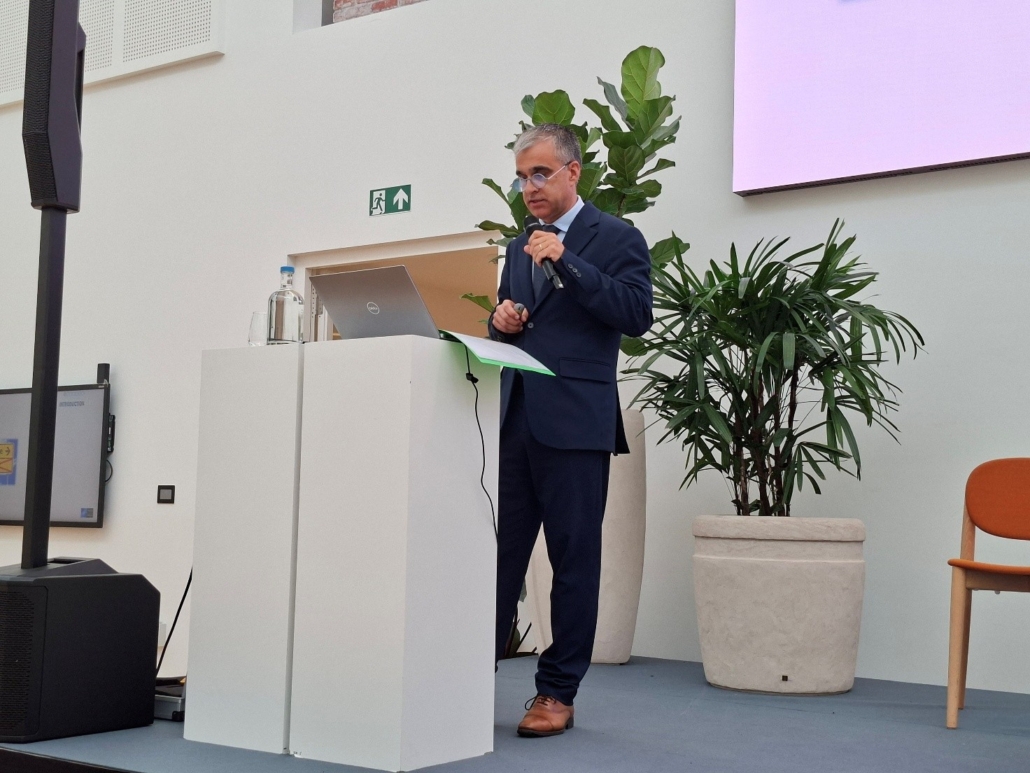
In his keynote address, Captain João Galocha, Military Counsellor in the Portuguese Delegation to NATO, highlighted the growing importance of resilience in the face of disruptions such as cyberattacks, floods and supply chain interruptions, emphasising that resilience requires the capacity to prepare for, withstand, respond to and recover from crises. As threats increasingly cross sectoral and national borders, he stressed that resilience must be understood as a property of the whole system, requiring cooperation between governments, industry and society.
The keynote underlined the critical role of civilian infrastructure and essential services in maintaining societal functions during crises, as well as the importance of shared responsibility and dual-use infrastructure. Drawing on NATO’s approach to resilience and lessons from Ukraine, Captain Galocha emphasised that resilience must be integrated throughout the built environment’s lifecycle, from planning and design to construction, operation and transformation. Although future disruptions cannot always be predicted, Europe can prepare for them by embedding resilience into the way it builds and manages its built environment.
Panel 1: From Vulnerability to Resilience: Securing Europe’s Built Environment
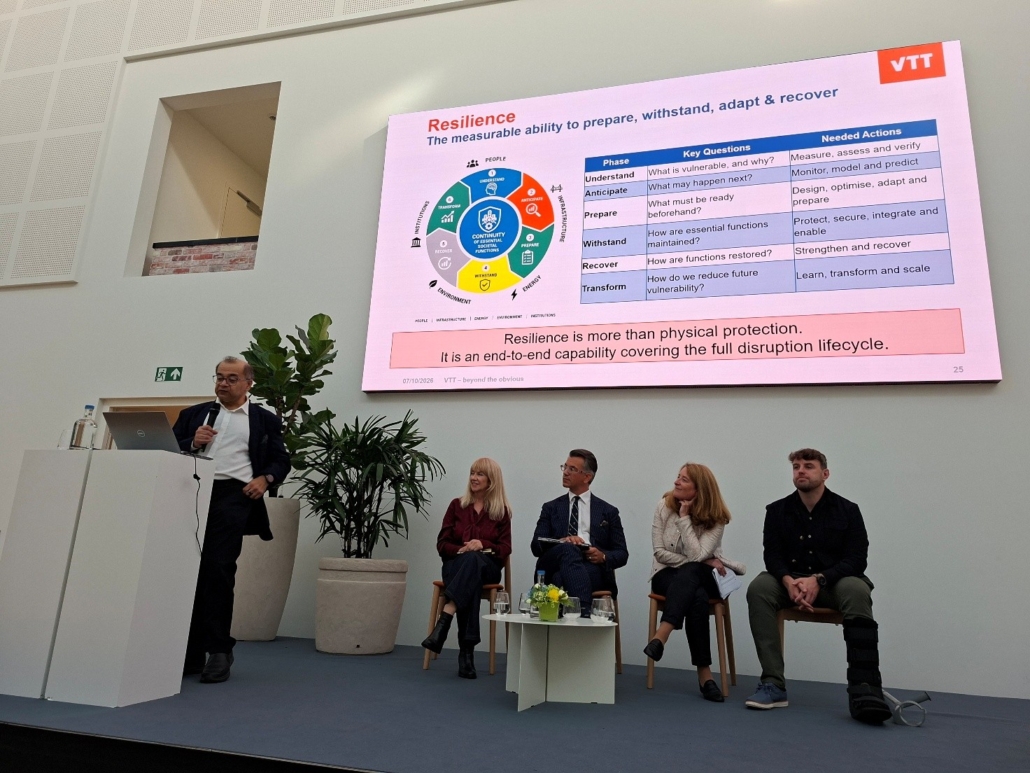
Moderated by Prof. Dr Abdul Samad (Sami) Kazi, Research Team Leader for Smart Cities and Intelligent Buildings at VTT, the panel explored how Europe can move from addressing individual vulnerabilities to strengthening the resilience of the built environment as a whole. Discussions highlighted the need to ensure that essential services remain functional and safe during disruptions, rather than focusing solely on the performance of individual assets under normal conditions.
Rita Moura, Director of Innovation at Teixeira Duarte, emphasised the need to integrate natural and human-made hazards, extreme events and security requirements, including dual-use infrastructure, into the design of major infrastructure projects.
Prof. Stergios-Aristoteles Mitoulis, Professor of Sustainable and Resilient Infrastructure and Director of the UCL Centre for Global Infrastructure Resilience at University College London, advocated a systemic approach that accounts for cascading risks and interdependencies. Introducing the concept of “Sustained Resilience”, he stressed that resilience must be embedded in infrastructure and urban planning over the long term, combining risk management with the capacity to withstand, adapt to and recover from crises. Drawing on research into post-war recovery in Ukrainian cities, he highlighted redundancy, diversity, modularity and adaptability as key principles for sustaining resilience.
Niall Buckley, Senior Project Manager at IES and Coordinator of the Minority Report project within the Resilience of the Built Environment Cluster, highlighted how digital twins combining simulations, sensor data, artificial intelligence and machine learning can help identify vulnerabilities and support better-informed decisions.
Emmanuelle Frénéat, Group Chief Technical Officer at EGIS, presented findings from four reports covering energy, transport, information and communication technologies (ICT), and water. She stressed that Europe’s resilience challenge is systemic, with ageing infrastructure, climate change, geopolitical dependencies, digital risks and fragmented governance creating interconnected vulnerabilities across essential services.
The discussion underscored the need for coordinated, system-level resilience planning, stronger cooperation between public authorities, industry, emergency services and communities, and procurement practices that encourage innovative, cost-effective solutions. Panellists also highlighted the role of digital technologies in anticipating disruptions, while stressing the need for redundancy and robust backup systems. Ultimately, resilience must be built into infrastructure planning and investment before a crisis occurs.
Panel 2: Circular by Design: Building Europe’s Resource-Efficient Future
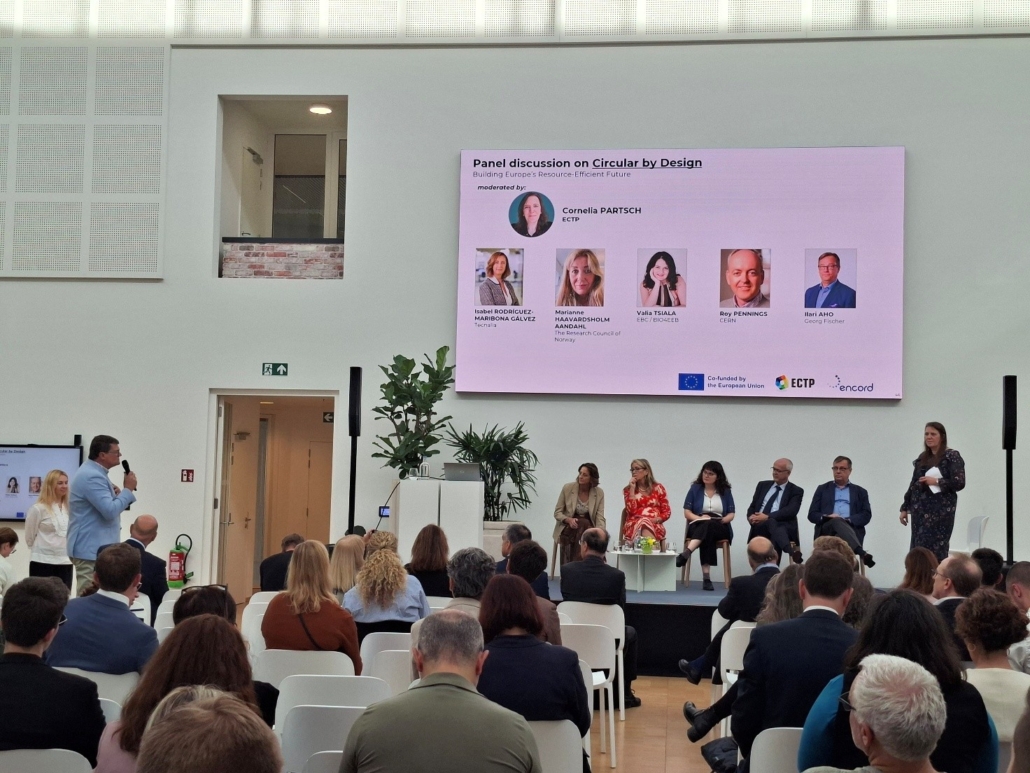
Moderated by Cornelia Partsch, Policy & Project Officer at ECTP, the panel explored how circular construction can become a competitive and economically viable approach. Discussions highlighted the strategic importance of reducing resource consumption and dependencies, extending the lifespan of buildings, reusing materials and creating stronger markets for circular construction.
Isabel Rodríguez Maribona, Technology Director for Energy, Climate & Global Transition at TECNALIA, highlighted how traditional practices offer lessons for circular design, emphasising adaptive reuse, repair and extending the lifespan of existing buildings to reduce demand for new resources.
Marianne Haavardsholm Aandahl, National Expert to the European Commission on Energy and National Contact Point for Horizon Europe Energy at the Research Council of Norway (RCN), presented opportunities to recover materials from existing infrastructure, including steel from decommissioned offshore platforms. She also stressed the need to reconsider demolition and prioritise renovation, reuse and adaptation where possible.
Valia Tsiala, Senior Technical Officer at EBC and representative of the BIO4EEB project, highlighted the role of small and medium-sized enterprises (SMEs) in implementing circular solutions. BIO4EEB is demonstrating bio-based, energy-efficient renovation solutions across five European buildings, assessing their technical performance, costs, installation requirements and potential for wider uptake.
Roy Pennings, Senior EU Projects Manager at CERN, presented the CERN O2 project, which uses nature-based solutions to regenerate an operational research site. Measures include expanding green spaces and tree cover, reducing sealed surfaces and improving water management, while creating opportunities to test and share solutions for other urban, industrial and research environments.
Ilari Aho, Head of Global Business Sustainability at GF Building Flow Solutions, stressed the importance of extending asset lifespans, reusing materials and recycling. He highlighted the essential role of SMEs and micro-enterprises, while pointing to the economic and logistical challenges of establishing a functioning single market for secondary raw materials.
The discussion underscored that scaling up circular construction requires action across the entire value chain as well as stronger business models for circular materials. Priorities include designing for durability and disassembly, making better use of existing buildings and recovered materials, supporting SMEs and improving markets for secondary raw materials. EU policies, including the forthcoming Circular Economy Act, can help strengthen the Single Market for secondary raw materials and stimulate demand for recycled materials. Panellists also emphasised the importance of combining different areas of expertise from the earliest design stages. Ultimately, circularity must move beyond individual projects to become an economically viable, mainstream approach to construction and renovation.
Panel 3: From Innovation to Impact: Industrialising and Scaling Up Construction
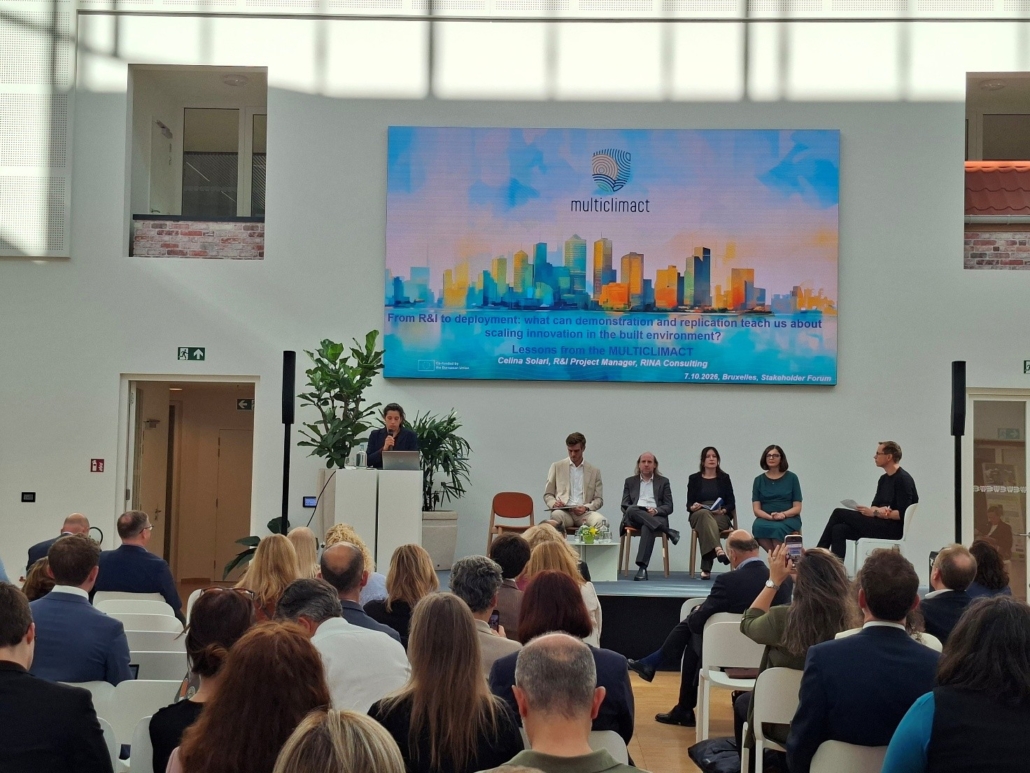
Moderated by Magnus Österbring, ENCORD Secretary General, the panel explored how to turn successful research and innovation into solutions that can be deployed across Europe. Discussions highlighted the need for supportive regulation, predictable market conditions, appropriate financing and procurement practices that reward innovation and sustainability beyond upfront costs.
Natalia Zebrowska, Head of Unit – Construction at the European Commission’s Directorate-General for Internal Market, Industry, Entrepreneurship and SMEs (DG GROW), emphasised the importance of harmonised standards, better access to the single market and appropriate skills and financing. Procurement criteria that recognise low-carbon products, bio-based materials and recycled content can also strengthen the sector’s competitiveness.
Maira Madala, EU Public Affairs Manager at Knauf Insulation, stressed that wider deployment of low-carbon solutions depends on predictable market conditions, affordable energy and support for energy-intensive industries, enabling manufacturers to invest in decarbonisation through measures such as electrification and cleaner energy sources.
Javier Bonilla Díaz, Senior Manager for Innovation Strategy & Digital at ACCIONA, highlighted the difficulty of translating European policy ambitions into practice when competition focuses primarily on price. He called for more flexible mechanisms and faster implementation of EU policies at national level to encourage innovation in construction.
Tim van Ee, Consultant and Knowledge Manager in the Conceptual and Industrialised Construction Department of Digital Built Environment at TNO, underlined the need to rethink construction processes and planning, integrating innovation from the design stage to accelerate delivery through industrialised construction.
Celina Solari, Senior Innovation R&D Project Manager at RINA and Coordinator of the MULTICLIMACT project, shared lessons on scaling up research and demonstration results. She stressed the importance of considering installation, integration and maintenance from the outset, using interoperable tools and open standards, and involving end users. Successful pilots must be followed by investment in deployment, accessible knowledge and wider adoption.
The discussion identified public procurement as a key lever for scaling up sustainable construction. Moving beyond price-only competition requires greater recognition of quality, innovation, circularity and low-carbon performance, alongside more flexible procurement and stronger cooperation between industry and public authorities. Ultimately, Europe must move beyond isolated pilots to make industrialised and sustainable construction standard practice, creating the conditions for companies to invest and scale up.
Panel 4: Boosting Competitiveness: AI, Robotics and the Future of the Built Environment
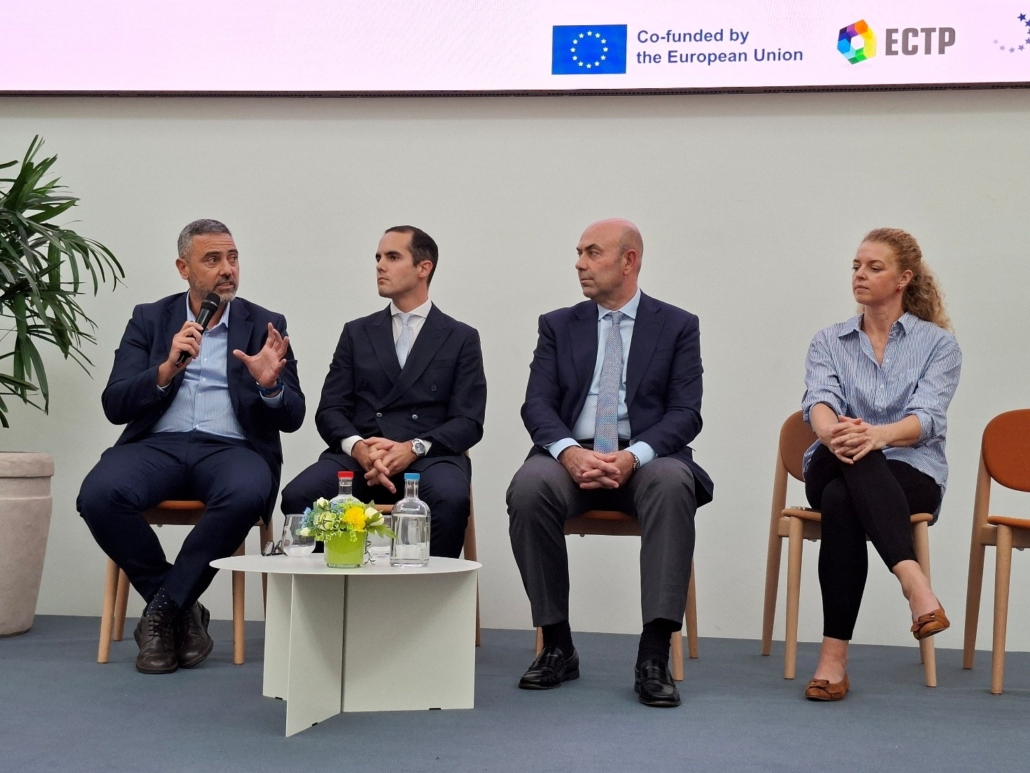
Moderated by Vedran Angebrandt, Project Officer at CINEA, the panel explored how artificial intelligence (AI), robotics and digital technologies can boost the competitiveness of Europe’s construction sector. Discussions highlighted the need to accelerate deployment while addressing technological dependencies, skills gaps and the challenges of scaling up innovative solutions.
Stavros Stamatoukos, Policy Officer for Digitalisation and AI at the European Commission’s Directorate-General for Energy (DG ENER), presented the EU’s approach to technological sovereignty, highlighting efforts to strengthen semiconductor supply chains, harness AI and cloud technologies, and reduce dependencies while ensuring secure and trusted digital solutions.
José Solís Hernández, Research & Innovation Director at CEMOSA, highlighted the potential of digital twins to improve the design, operation, maintenance and resilience of the built environment. He identified market fragmentation, limited digitalisation, skills shortages and the gap between research and deployment as key barriers to competitiveness, calling for interoperable solutions and sustained support for innovation.
Miguel Segarra, Senior Vice President of Innovation at DRAGADOS, stressed the importance of trust in AI and autonomous systems. Their successful integration into construction sites requires solutions that are safe, secure, reliable and maintainable, supported by clear control mechanisms and effective coordination between people, technologies and operational processes.
Rosie Shapiro, Vice President of Partnerships at CivicLabs, addressed the gap between promising demonstrations and widespread adoption of AI and robotics. She highlighted organisational barriers and the need for clear operational ownership, measurable performance indicators, collaboration between site teams and technology providers, and procurement pathways that enable solutions to be adopted at scale.
The discussion underlined that successful deployment depends on more than technology alone. AI and robotics must address practical needs, operate safely alongside workers and be supported by appropriate infrastructure, connectivity, maintenance and human supervision. Panellists also stressed the importance of European cooperation, shared knowledge and data, and standardisation to accelerate adoption while maintaining safety, trust and control.
Panel 5: People at the Heart of Resilience: Scaling People-Centred Innovation
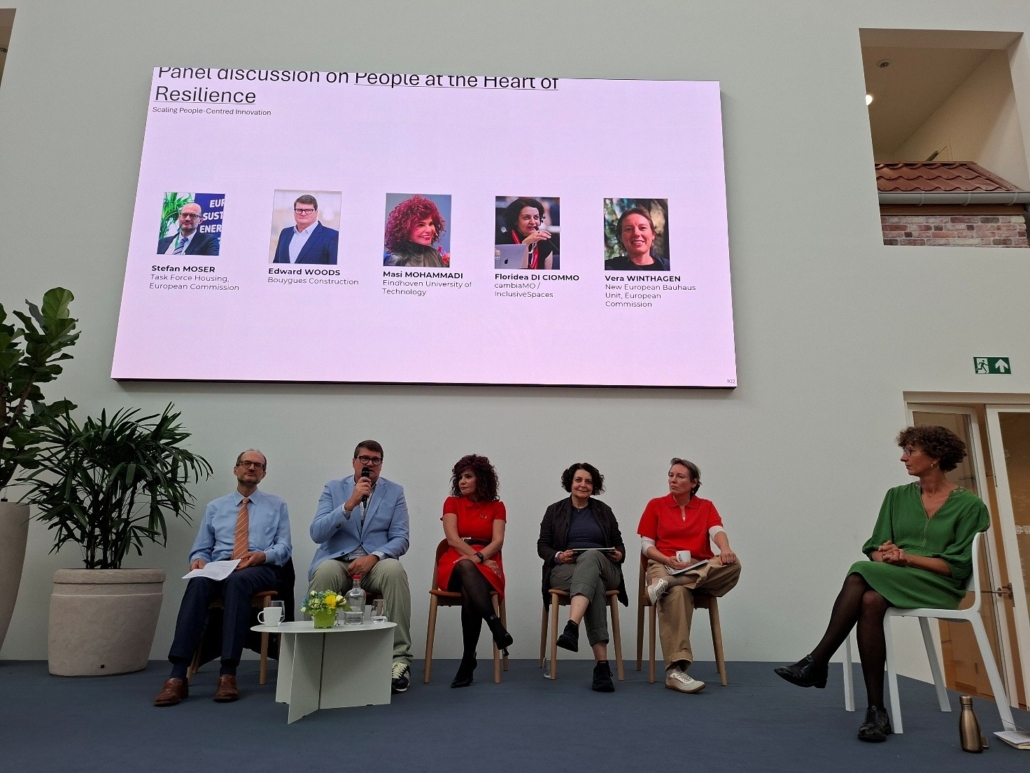
Moderated by Clémentine Coujard, Consultant at Dowel Innovation, the panel explored how to scale people-centred innovation while keeping the built environment affordable, inclusive and resilient. Discussions highlighted the need to address diverse needs and ensure that innovation improves everyday life, particularly for people facing social, economic or physical barriers.
Stefan Moser, Head of the Housing Task Force at the European Commission, highlighted the need to address housing affordability, climate resilience and the gap between supply and demand. He stressed the importance of accessible housing finance, sharing good practices and coordinating stakeholders at all levels. The European Commission’s Pan-European Housing Investment Platform supports these objectives, alongside efforts to address the needs of vulnerable groups.
Edward Woods, Head of R&D, Innovation and Venture Capital at Bouygues Construction, discussed how standardisation and industrialisation can make housing more affordable without compromising design quality or local identity. Adaptable components, green areas and shared spaces can help combine cost efficiency with attractive, community-oriented neighbourhoods.
Prof. Masi Mohammadi, Professor and Chair of Smart Architectural Technologies at Eindhoven University of Technology, emphasised that social resilience depends on environments that respond to people’s needs. Drawing on the ELLI project in the Netherlands, which focuses on people living with dementia, she highlighted the value of co-design and lived experience in creating inclusive neighbourhoods. She also stressed the importance of addressing social, psychological, physical and cognitive accessibility while ensuring affordability.
Floridea Di Ciommo, Director of cambiaMO and Coordinator of the InclusiveSpaces project, highlighted barriers to inclusive mobility, including inaccessible information, missing tactile paths and ramps, and inconsistent step-free access. She stressed that universal design is a human-rights principle grounded in dignity, equality, participation and autonomy, and that accessibility must be considered throughout the user journey.
Vera Winthagen, Deputy Head of the New European Bauhaus (NEB) Unit at the European Commission’s Joint Research Centre, presented the NEB’s contribution to more sustainable and inclusive neighbourhoods. She highlighted the NEB Facility’s support for community-led transformation and innovation, the NEB Academy’s work on skills and knowledge, and the NEB Catalogue as a resource for sharing good practices and supporting replication.
The discussion reinforced that people-centred innovation must be inclusive by design and developed with the communities it serves. Scaling up requires understanding lived experiences, removing physical and cognitive barriers, ensuring affordability and strengthening cooperation between research, policymakers, industry and local communities. This approach can help deliver a built environment that is not only more resilient and sustainable, but also more accessible and responsive to people’s needs.
Special Session on the B4PIC Network
Nerea Gómez, Policy & Project Officer at ECTP, presented the progress of the Built4People Innovation Clusters Network (B4PIC Network) and its role in accelerating innovation across Europe’s built environment. Supported by the NEBULA and STAR*track Coordination and Support Actions, the Network fosters multidisciplinary, locally rooted innovation with European reach, guiding clusters through three stages of maturity: Prospective, Emerging and Established B4PICs. As of October 2026, the Network spans 21 countries across the EU27 and beyond, bringing together 34 B4PICs: 29 Emerging and 5 Prospective clusters. Following the recent closure of a new Expression of Interest call, applications are being assessed, with further interest from Greece, Slovenia, France, Belgium, Sweden and Cyprus. This continued expansion aims to strengthen collaboration and scale up innovation across Europe’s built environment.
Round up and closing
In his closing remarks, Edward Woods thanked the audience for their participation, as well as the organisers, moderators and speakers for their contributions to a day of fruitful discussions and knowledge exchange. The Forum concluded with a shared message: building a more resilient Europe requires moving from ambition to action. From strengthening critical infrastructure and embracing circular construction to scaling up industrialised solutions, harnessing digital technologies and putting people at the heart of innovation, the discussions highlighted the need for stronger collaboration across the entire built environment value chain. Turning these ambitions into lasting impact will require coordinated action from policymakers, industry, researchers and local communities to ensure that innovation translates into practical, scalable solutions for a more sustainable, inclusive and resilient Europe.
THE PRESENTATION SLIDES ARE AVAILABLE TO DOWNLOAD HERE.