Built4People projects clustering event

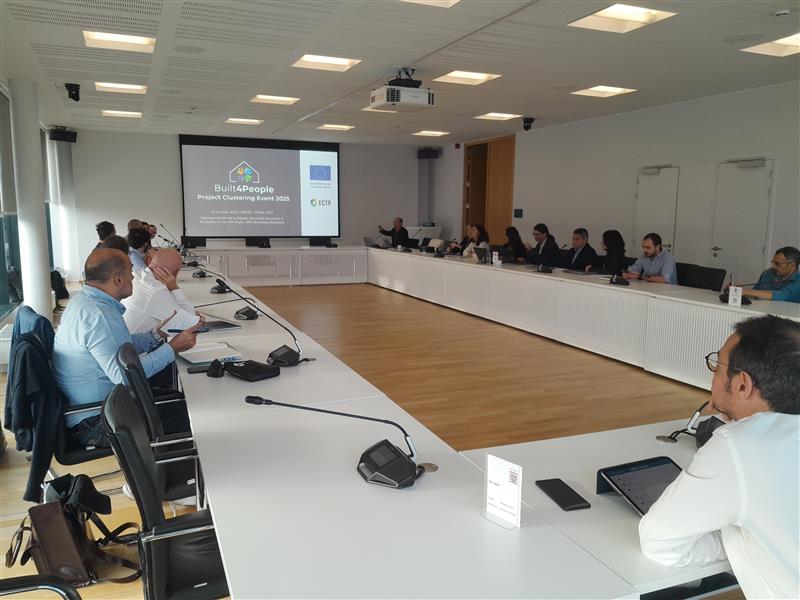
The Built4People Projects Clustering Event took place on 16 October 2025 in Brussels, Belgium. Organised by The European Climate, Infrastructure and Environment Executive Agency (CINEA), the European Commission, and ECTP in the context of the Built4People project STAR*track, this annual event brings together representatives from all projects funded under the Built4People calls. The aim of the event is to provide a valuable networking opportunity, foster knowledge exchange, and share lessons learned, challenges faced, and good practices developed across the Built4People (B4P) community. 

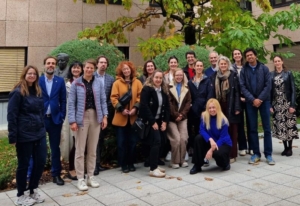
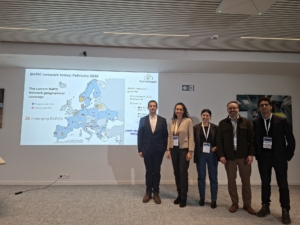
Attendees at the B4P Clustering Event 2025.

The event opened with welcoming remarks by Alain Zarli (Secretary General of ECTP), Mathieu Daloze (Policy Officer at DG ENER), and Annarita Ferreri (Head of Sector at CINEA).  

Following the opening, Mathieu Daloze offered an overview of the latest European policies related to the construction sector, highlighting the recent updates to the Energy Performance of Buildings Directive (EPBD), including National Building Renovation Plans, and initiatives under the Affordable Energy Action Plan such as the forthcoming Heating and Cooling Strategy, the Electrification Action Plan, and the Citizen Energy Package.  

Mathieu Daloze also shared insights on the Blueprint towards a decarbonised building stock by 2050, the current state of Cluster 5 (Climate, Energy and Mobility) and Work Programme 2025–2027, as well as early perspectives on the next Framework Programme 10 (FP10), which will continue to support partnerships in sustainable construction and energy efficiency under Pillar II.  

Mathieu Daloze (DG ENER) presenting an overview of the latest policy developments in the construction sector.

Annarita Ferreri presented the Built4People call statistics from 2021 to 2024, including projects funded under the 2024 call — FRAIMwork, SPHEERE, RADIANCE, ShieldBot, DTERBIM, INTEGRATES, CRedIBlE, Le Colaz, BLUEPRINT, and RenoVisor — some of which were supported through additional budget from the reserve list.  

Annarita Ferreri also introduced the upcoming call HORIZON-CL5-2026-02-D4, with a deadline of 17 February 2026, with three projects expected per topic. The presentation showed that EU contributions are fairly balanced between private-for-profit entities (33%) and research organisations (34%), with 40 ongoing projects, 639 participating organisations, and 27% of EU funding going to SMEs. As she noted, the high number of applications has led to a lower overall success rate in 2025. 

The next session, led by Alain Zarli, focused on the Built4People Partnership, providing an overview of its mission, general and specific objectives, as well as its KPIs and partner-specific impact pathways.  

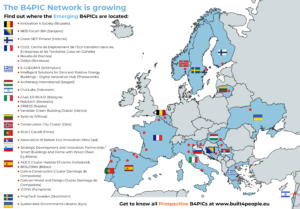
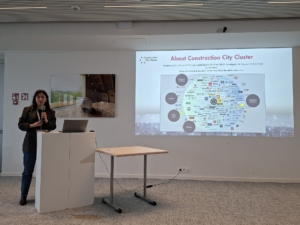
Following this, Anastasiya Yurchyshyna, ECTP, presented the state of play and next steps of the B4PIC Network, which now includes participants from 21 countries across the EU27 and beyond, bringing together 34 Built4People Innovation Clusters (B4PICs)— 24 Emerging and 10 Prospective. 

 This growth reflects the outcomes of the B4P Charter Signature Ceremony, held on 15 October 2025 as part of the Built4People Stakeholders Forum, during which six new B4PICs signed their B4PIC Charters, officially becoming Emerging B4PICs and beginning their journey to implement their roadmaps and advance through the network’s maturity process. 

By signing the B4PIC Charter, clusters commit to progressing towards the required level of maturity over a specified timeline, developing their cluster status from ‘Emerging’ to ‘Prospective’ and then finally ‘Established’.  

Once the signed clusters have reached the highest level of defined maturity (by meeting at least two mandatory and one optional ‘success factors’), they will be regarded as an officially ‘Established’ cluster.  

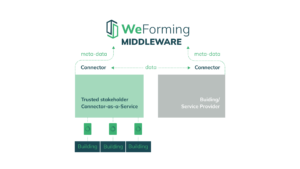
The event continued with presentations from four mature projects funded under the 2021 and 2022 calls: FORTESIE, presented by Paraskevi Plagaki (European Dynamics); Herit4ages, by Carlos Ernesto Ochoa (IERC); RE-SKIN, by Fabrizio Leonforte (Politecnico di Milano); and WeForming, by Ângelo Casaleiro (R&D Nester), showcasing their achievements, challenges, and innovative solutions in the built environment sector. This was followed by presentations from four newly granted projects starting in 2025: CRedIBlE, introduced by Paris A. Fokaides (Euphyia Tech); INBLANC, by Andre van Delft (DEMO Consultants); Le’ Colaz, by Eleni Goni (E2ARC); and RADIANCE, by Gabriel Fontenla (Universidad de Vigo), highlighting the next wave of innovation and upcoming contributions to the Built4People Partnership. 

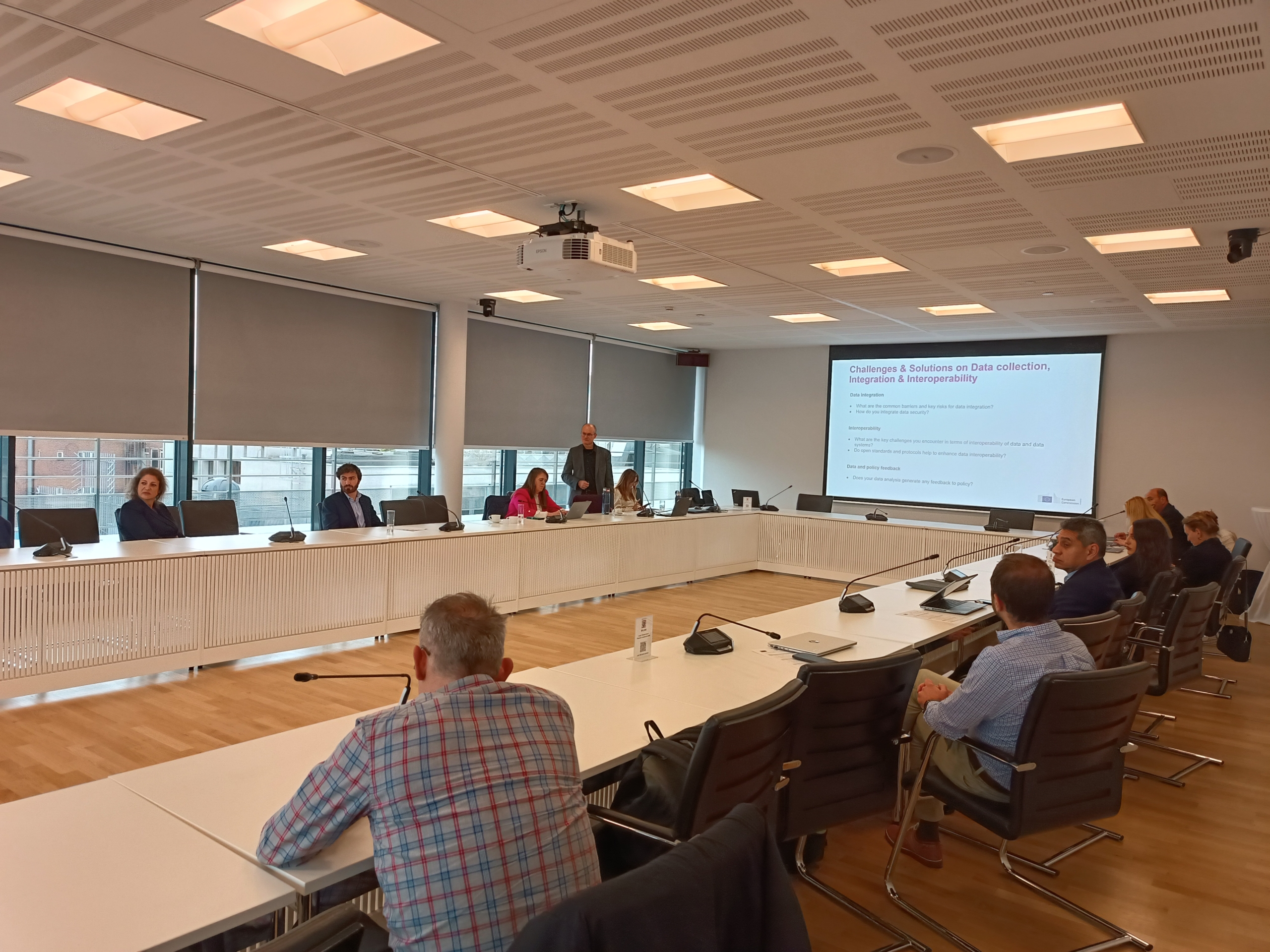
A dedicated break-out session on Challenges & Solutions on Data Collection, Integration & Interoperability, moderated by Olav Luyckx (CINEA), explored key issues and solutions across data management in Built4People projects. Participants discussed the types of data collected, ranging from building and energy consumption data, humidity, overused resources, and digital twin aspects to qualitative societal and life-cycle inventory data; and the challenges of collecting it in a useful, standardised, and confidential manner.  

Solutions included standardisation, using accessible data from other projects, and ensuring data security, with proposals for a European observatory and trustworthy servers. On data integration, challenges included difficulties with energy data, infrastructure, and using aggregated data from other EU projects. Solutions focused on secure sandboxes, minimum data standards, and potentially a joint data repository to enhance knowledge-sharing. Interoperability challenges highlighted differences in regulations, software, and platforms across countries, with open standards and protocols identified as key to overcoming these barriers.  

Challenges and solutions on data collection, integration & interoperability break out session taking place.

Finally, discussions emphasised the value of data for policy feedback, including input for the Smart Readiness Indicator testing phase in Member States and for local or regional roadmap development. Key takeaways included the need for standardisation and harmonisation, data security compliance, and the promotion of open standards and protocols to enhance interoperability. 

A second break-out session, Challenges & Solutions for Demo Buildings & Sites, moderated by Linda Novosadová (CINEA), focused on the technical, regulatory, financial, and social challenges of coordinating demo projects across different types of sites and regions.  

Participants highlighted difficulties such as the lack of clear guidelines for defining pilot projects, accessibility issues for people with disabilities, changes of ownership, permitting bottlenecks, legal barriers, certification processes, and skills gaps for innovative products.  

Solutions and good practices shared by the participants included implementing smaller demonstrators, ensuring transparency, applying risk management, involving building managers and owners, addressing privacy and insurance issues, and building trust with demo site responsible parties. Emphasis was also placed on the need for frameworks to define pilot projects, involving universal design experts, and maintaining proactive engagement with project officers.  

Key takeaways included the importance of clear guidelines, addressing accessibility, legal, and operational challenges, and adopting flexible, adaptive strategies to manage risks and ensure successful project implementation. 

The event concluded with Veronika Schröpfer (CINEA) presenting a synthesis of the break-out sessions, summarising the key challenges, solutions, and best practices discussed. Annarita Ferreri closed the event by thanking all participants for their presence and engagement, emphasising the importance of always seeing projects, maintaining ongoing dialogue between project officers and participants, and ensuring that feedback informs policy through evidence-based information. 

Built4People announces upcoming 2026 innovation and collaboration forum

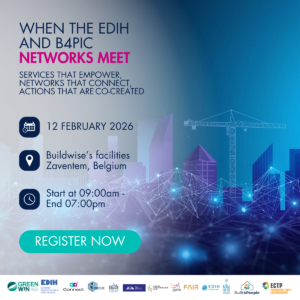
The Built4People Partnership is pleased to announce an upcoming forum on digital innovation and collaborative construction networks, taking place at Buildwise in Zaventem, Belgium, on 12 February 2026.

“When the EDIG and B4PIC Networks Meet” is a free cross-network collaboration forum that will bring together European Digital Innovation Hubs (EDIHs), Built4People Innovation Clusters (B4PICs), and key industry stakeholders.

This highly participatory full-day forum is designed to go beyond networking — turning connections into practical, real-world action.

Morning forum sessions will feature the B4PIC Network Insights & Ecosystem Overview, including presentations from:

  • EDIHs: A European Commission (EC) representative will provide an overview of the network and its service offer across four pillars.
  • B4PIC Network: Representatives from the EC and ECTP will present the network’s structure and role within the Built4People (B4P) initiative.
  • Thematic Working Group on Construction: EDIH Connect and DIH Cube will highlight key members, focus areas, and achievements.

Participants will then explore practical examples of EDIH services for companies, followed by a networking lunch and special visit involving live demonstrations at Buildwise’s facilities.

The afternoon sessions will focus on collaboration and co-creation, including:

  • Plenary Session: An overview of the participatory process will be presented, highlighting cooperation opportunities such as EU funding calls and co-organised events, as well as expected outcomes for participants.
  • Participatory Round Tables: Parallel working groups will enable participants to co-design initiatives, including joint EU funding proposals, valorisation of digital tools and project outcomes, startup events, and joint presence at the Smart City World Expo Congress.

The forum will conclude with insights on future European Union (EU) work programs, culminating with networking and beer tasting in the evening!

Availability is limited, and attendance is free, so interested parties are encouraged to register as soon as possible in advance to secure their place at this unique European innovation forum.

Register for the forum and see the full agenda here.

e-CODOMH B4PIC hosts first conference showcasing Greece’s momentum in sustainable construction

The first Conference of Built4People Innovation Cluster (B4PIC), e-CODOMH, was held on 11–12 November at the Demokritos Amphitheatre in Athens, Greece, marking an important milestone for Greece’s growing ecosystem in sustainable construction and industrial innovation.

Bringing industry and research together

Bringing together companies from across the construction and materials value chain, alongside universities, research centres and public bodies, the two-day event highlighted the transformation currently reshaping both the Greek and European built environment.

Conference attendees explored themes ranging from sustainable renovation and circularity to advanced manufacturing technologies and the use of digital tools in the construction sector. What set the conference apart, however, was its strong emphasis on uniting business and science in a format designed to foster real synergies—positioning e-CODOMH as an emerging hub of knowledge, research and production within Greece, and beyond.

Key messages from industry and experts

Built4People Innovation Cluster, e-CODOMH’s, presentation during the conference on 11 November at the Demokritos Amphitheatre in Athens, Greece.

Opening the event, e-CODOMH President, George Eliades, underscored the conference’s role as a space for connection and development, noting the cluster’s potential to accelerate innovation across the built environment.

Leading industrial players, including platinum sponsor Elval Colour and gold sponsors ALUMINCO and Ilicon, shared insights into their ongoing efforts to develop low-carbon materials and environmentally responsible products. Their contributions reflected a shared commitment to drive sustainable growth via collaboration and to support the market’s transition to cleaner, smarter building solutions.

Technology providers also played a central role at the conference, with companies such as Core Innovation Groups showcasing digital solutions powered by artificial intelligence. Their presence underscored how Industry 4.0 technologies are increasingly shaping manufacturing and construction processes in Greece.

The sustainability agenda was further strengthened by contributions from various national organisations and experts. Speakers from the Greek Sustainable Buildings Council and Knauf Insulation highlighted the need for continuous collaboration, emphasising the crucial role of advanced materials and design practices in decarbonising the built environment.

Understanding e-CODOMH

Beyond its technical discussions, the conference offered the broader market an opportunity to better understand e-CODOMH’s mission and evolution. Founded in 2021 to bridge businesses, academia and research, the B4PIC continues to support innovation and respond to the complex challenges of modern construction.

Hosting the event at Demokritos Amphitheatre symbolically reinforced this commitment, bringing together technology, science and industry under one roof.

Looking towards a sustainable future

As the event concluded, a clear message emerged: the technologies and solutions presented are not aspirations for the distant future—they are already shaping today’s market. Greece is not simply keeping pace with European developments; in many areas, it is taking a leading role.

With strong engagement and a shared vision across sectors, the success of the first e-CODOMH Conference sets the stage for continued collaboration and further advances in sustainable construction. The next steps are awaited with great interest across the industry.

Learn more about the B4PIC Network.

New European Bauhaus: become a member of the NEB junction stakeholder assembly

The call to constitute the New European Bauhaus (NEB) Junction Stakeholder Assembly is now open!

This assembly is designed as an inclusive space for public authorities, built-environment actors, cultural and creative professionals, civic organisations, researchers, community connectors, youth and emerging professionals, and many others who want to shape the future of the NEB in practice.

The NEB Junction Stakeholder Assembly aims to:

  • Connect local practices and experiments with the NEB Junction Hub
  • Assure that what works on the ground informs tools and policy
  • Help align different actors around shared priorities and next steps

It will produce recommendations that will be shared through the NEB Junction Hub, i.e., the web platform for disseminating NEB results.

You can find more information about the Assembly process and the application form here.


ECTP introduces STAR*track at Smart City Expo World Congress 2025

On 6 November 2025, STAR*track partner, the European Construction Technology Platform (ECTP), presented the project at the Smart City Expo World Congress held in Barcelona, Spain, in a collaborative session with fellow project partner, METABUILDING Labs. 

From left to right: Germain Adell (Metabuilding Association), Nerea Gómez Morán, (ECTP) and Emre Yontem (EcoWise Ltd) on stage at the Smart City Expo Congress, Barcelona, Spain on 6 November 2025.

Nerea Gómez Morán, ECTP, took part in the “Unlocking Construction Innovation in Europe: The Metabuilding Ecosystem” session, alongside Germain Adell, General Director of the Metabuilding Association, and Emre Yontem, EcoWise Ltd (also a STAR*track project partner). 

During the session, Nerea discussed how ECTP, via STAR*track and the Built4People (B4P) Partnership, aim to foster innovation on a European scale. She also underlined how Built4People Innovation Clusters (B4PICs) aim to drive the transformation of innovation strategies into concrete actions and results. 

The session also featured the presentation of the B4PIC Network, a key component of the Built4People and STAR*track ecosystem. This network brings together innovation clusters from across Europe, and beyond, that share the common goal of accelerating the green and digital transition of the built environment. 

B4PICs are seen as essential players in this transformation, acting as true agents of change within their respective territories. For this reason, B4P and STAR*track are committed to supporting B4PICs throughout the entire cluster maturation journey, by providing tools that facilitate their work and enhance their effectiveness. 

One of these tools is the Metabuilding Platform, which looks to streamline cluster management, helping B4PICs to easily organise member relationships and leverage data-driven insights to deliver targeted content and events. The platform offers multiple benefits for B4PICs: it strengthens collaboration and communication, supports membership growth, and connects clusters to national and European networks for greater impact. 

Europe is falling behind in the green transition. Via STAR*track, B4P, and the Metabuilding Platform, B4PICs hope to change this by transforming ambition into action and leading the shift towards a more resilient and sustainable future across Europe, and beyond. 

Metabuilding stand at Smart City Expo Congress, November 2025, with Nerea Gomex Moran (ECTP), Germain Adell (Metabuilding), Tommaso Francese (R2M Solution), Thoma Messervey (R2M Group), Alejandro Adell (Metabuilding), Emre Yontem (EcoWise).

Learn more about STAR*track 

Learn more about the B4PIC Network 

New video: three initiatives working together to transform Europe’s built environment

A new video has been released, providing an overview of how the Built4People Partnership, the Built4People Innovation Cluster (B4PIC) Network, and the STAR*track project work together to support sustainable transformation across Europe’s built environment. 

The Challenge 

Europe’s building stock is lagging in the green transition. To achieve complete decarbonisation by 2050, there is an urgent need to accelerate sustainable, people-centric innovation and bring innovative solutions to market more effectively. 

Three Interconnected Initiatives 

The video introduces three initiatives that form the basis of a comprehensive EU-funded approach to address this challenge:

The Built4People Partnership (2021-2027)

Built4People is a co-programmed public-private partnership between the European Commission and the European Construction Technology Platform (ECTP). The partnership aims to channel €400 million into research and innovation to increase collaboration and accelerate sustainable innovation across the built environment, aligned with New European Bauhaus values and principles. By strengthening cooperation between research, industry, and policy, Built4People works to enhance the competitive position of EU companies and bring innovative products to the European built environment.

The Built4People Innovation Cluster (B4PIC) Network

The B4PIC Network was initially established by the Nebula project to stimulate sustainable and people-centric innovation while boosting regional economies. The network brings together a community of regional Innovation Clusters, creating connections and facilitating knowledge exchange across borders. 

As of November 2025, the B4PIC Network spans over 20 European countries and continues to grow. The network aims to support the EU’s climate goals and create lasting sustainable impact throughout Europe and beyond by connecting innovators, researchers, businesses, and policymakers at the regional level.

The STAR*track Project (2024-2027)

The STAR*track project, coordinated by Nobatek/INEF4, continues and strengthens the work of developing the B4PIC Network. Running from May 2024 to April 2027, STAR*track has four primary objectives: 

  • Expand and strengthen the B4PIC Network by recruiting new Innovation Clusters and deepening collaboration among existing members 
  • Empower Innovation Clusters through targeted training and support on innovation processes and financial opportunities 
  • Provide innovation support to companies for product development, helping them navigate the path from concept to market 
  • Raise awareness among financiers and public authorities about the funding needs of innovative companies, and work to improve access to financing opportunities 

Working Together for Sustainable Impact

These three initiatives form an integrated ecosystem designed to support innovation, strengthen partnerships, and accelerate the transition to a sustainable and smart built environment that is accessible to all. 

Watch the video here.

The Fourth Built4People Partnership Stakeholders Forum and B4PIC Charter Signature Ceremony

The fourth Built4People (B4P) Stakeholders Forum was held on October 15th, 2025, in Brussels, Belgium. The event focused on innovation-driven affordable housing and the built environment, bringing together more than 80 policymakers, industry leaders, and researchers to discuss the green and digital transition in Europe’s construction sector. A key part of the event was the B4P Innovation Cluster (B4PIC) Charter Signature Ceremony, where new prospective B4PICs signed their charters to join the network.

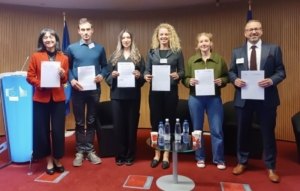
New emerging B4PICs after having signed the B4P Charter.

The event opened with welcoming remarks by Mathieu DALOZE (Policy Officer at DG ENER.B2, European Commission) and Alain ZARLI (ECTP Secretary General), setting the stage for a day dedicated to advancing innovation and sustainability in the built environment. Anastasiya Yurchyshyna (Project & Policy Officer at ECTP) served as the master of ceremonies, guiding the audience through the sessions.  

Following the opening, two high-level speeches provided key insights into the future of Europe’s construction and housing landscape. Margareta Djordjevic (Head of Unit – Energy Efficiency: Policy and Financing, DG ENER, European Commission) highlighted the importance of the European Energy Efficiency Directive (EED) and the Energy Performance of Buildings Directive (EPBD), noting that a crucial element of the EPBD is the submission of National Building Renovation Plans by the end of 2025. Djordjevic emphasised that housing must be seen not only as a market commodity but also as a social right, as mentioned in the State of the Union address by Ursula von der Leyen, President of the European Commission. Her intervention stressed the need to balance sustainability, affordability, and energy efficiency, pointing to the forthcoming European Affordable and Sustainable Housing Plan as a key initiative. She underlined that Research and Innovation (R&I) are essential drivers of this transition, and that the European Partnerships under Horizon Europe provide a vital, collaborative framework to achieve these goals.

The second high-level speaker, Edward Woods (Head of R&D, Innovation and Venture Capital at Bouygues Construction, and ECTP President), reflected on the evolution of his organisation: from an R&D-focused team to one integrating innovation and venture capital. Woods underscored the value of open innovation and collaboration across the entire value chain. He emphasised that Built4People Innovation Clusters (B4PICs) are a crucial component of this ecosystem, where partnerships and innovation must ultimately generate sustainable business opportunities.

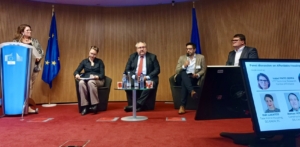
Opening session (from left to right): Alain Zarli, Mathieu Daloze, Margareta Djordjevic and Edward Woods.

The session “Built4People | Activating the New European Bauhaus” featured Emilie Vandam (Policy Officer at JRC.B4 – New European Bauhaus, European Commission), who presented the New European Bauhaus (NEB) as a growing community of bottom-up initiatives across Europe, integrated into EU programmes and policies to promote sustainability, inclusion, and beauty in the built environment. She highlighted the tools and guidelines supporting NEB projects, the ongoing expansion of the community—now involving five Commissioners—and the forthcoming Commission Communication and Council Recommendation reviewing the initiative’s future.

Vandam introduced the new NEB Facility, a dedicated funding instrument providing €120 million annually for R&I to develop NEB solutions and another €120 million for their roll-out and scaling up, and announced the next NEB Festival (9–13 June 2026). Larissa De Rosso (ACE EU Funding and Projects Manager) followed by linking Built4People and the NEB, showing how the facility translates into R&I opportunities. She referred to the BUGA Wood Pavilion as a NEB example, encouraged the use of the NEB Compass and its self-assessment tool, and promoted the Nebula Project’s NEB Handbook, the NEB Community online platform, and the NEB Advisors network.

De Rosso concluded by inviting participants to explore funding opportunities through National Contact Points, the EIT NEB Community, and the NEB Academy, reaffirming ACE’s active role in advancing NEB and B4P objectives.

Emilie Vandam and Larissa De Rosso during the “Built4People Activating the New European Bauhaus” session.

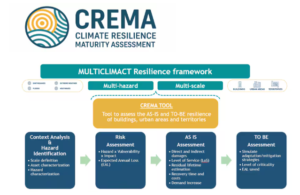
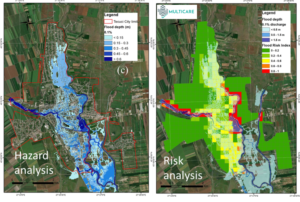
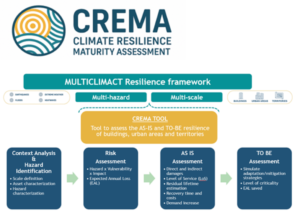
Continuing the connection between the two initiatives, the “Technical session with NEB and B4P projects” showcased practical examples of how both frameworks translate policy into innovation. Karine Laffont-Eloire (Dowell Innovation) presented the NEB Junction project, which aims to spread awareness and understanding of the New European Bauhaus, making its principles more accessible and ensuring engagement beyond the usual stakeholders. Fabrizio Tavaroli (RINA) introduced the MULTICLIMACT project, focused on protecting Europe’s built environment from the increasing risks posed by natural and climate-related hazards such as earthquakes, extreme weather, floods, and heatwaves.

Finally, Juan Carlos Guerrero (AIDIMME) presented the SNUG project, which promotes sustainability through the development of eco-friendly materials, the integration of artificial intelligence, and advances in energy efficiency and decarbonisation—all contributing to the shared NEB and B4P vision of a resilient and sustainable built environment.

Logos of the 3 projects presented during the “Technical session with NEB and B4P projects”.

After the coffee break, the session Affordable Housing – State of Play and Panel Discussion”, moderated by Isabel Pinto-Seppä (VTT) and Anastasiya Yurchyshyna (ECTP), brought together key stakeholders to explore how R&I can drive the transition towards affordable, sustainable housing in Europe. The panel featured Edit Lakatos (Policy Officer, Task Force Housing – DG ENER), Roman Horvath (Policy Officer, Construction Unit – DG GROW), João Gonçalves (SHAPE II project, Housing Europe), and Edward Woods (ECTP President, Bouygues Construction). Discussions centred on the sector’s need to meet multiple objectives—from circularity and infrastructure resilience to digitalisation and the urgent housing demand—while ensuring that R&I results from initiatives and partnerships like Built4People are effectively operationalised and upscaled.

Edit Lakatos presented the work of the newly established Housing Task Force under DG ENER, which coordinates housing-related policies across seven Directorates-General and is preparing the European Affordable Housing Plan, to be unveiled by the end of the year. She emphasised boosting supply, productivity, and investment, supporting vulnerable groups, and updating the definition of social housing within new state aid rules, alongside plans for a regular European Housing Summit.

Roman Horvath underlined the role of the construction ecosystem as an enabler for a greener, more resilient, and digital economy, announcing that the EU Construction Strategy for Housing Supply will also be published by the end of 2025, with a preview to be shared during the upcoming High-Level Construction Forum on 27 October 2025. João Gonçalves highlighted Housing Europe’s collaboration with local and regional partners to tailor solutions to specific contexts, stressing that innovation is key to tackling the housing challenge.He presented several good practice examples collected in the context of the SHAPE II project, including Aalborg East in Denmark, Innovation City Ruhr and Nettelbeckplatz in Germany, and Sociale Energie Sprong in Belgium, as well as examples of other innovative approaches such as the reuse of construction materials, cooperative housing models, repurposing of vacant buildings, and nature-based solutions.

Finally, Edward Woods emphasised the need for systemic and digital solutions, greater standardisation—as a prerequisite for industrialisation—and mass customisation to enhance efficiency and eliminate non-quality, noting that delivering affordable housing requires coordinated effort across the entire value chain, from contractors to real estate developers.

Panel discussion (from left to right): Isabel Pinto-Seppä, Lakatos, Roman Horvath, João Gonçalves and Edward Woods.

Following the panel discussion, Anastasiya Yurchyshyna presented the state of play and next steps of the B4PIC Network, which now encompasses participants from 21 countries across the EU27 and beyond, bringing together a total of 34 B4PICs—18 Emerging and 16 Prospective. Her presentation served as an introduction to the B4PIC Charter Signature Ceremony, a key moment of the event where six prospective B4PICs officially signed their B4PIC Charters, becoming Emerging B4PICs and beginning their journey to implement their roadmaps and advance through the network’s maturity process.

The new signatories were: Centre de Déploiement de l’Écotransition dans les Entreprises et les Territoires (CD2E) – France; CivicLabs – Israel; Intelligent Solutions for Zero and Positive Energy Buildings – Digital Innovation Hub (IsZEB DIH) – Greece; PropTech Sweden – Sweden; Sustainable Environments Ukraine (SE-UA) – Ukraine; and SRIP PSiDL (Smart Buildings and Home with Wood Chain) – Slovenia

Audience at 4th Built4People Partnership Stakeholders Forum.

The event concluded with closing remarks by Veronika Schröpfer (Project Officer, CINEA), who highlighted the crucial role of Built4People as an interlinking point within the European built environment, connecting projects such as SNUG and MULTICLIMACT under a common vision.

She reminded participants that achieving climate neutrality goes beyond technological innovation—it is equally about engaging people and communities. Schröpfer also underlined the importance of recognising the local diversity of the built environment across Europe, emphasising that place-based approaches are essential to ensure that the green and digital transitions truly meet local needs and realities.

Anastasiya Yurchyshyna and Veronika Schröpfer presenting at the Stakeholder Forum.

Download the presentation here.

And watch now the recording (password: Bu25ReC1510F).

4th Built4People Stakeholders Forum – final agenda now available, register today!

15 October 2025 | 14h00 – 17h30 CEST

Breydel Auditorium (in the European Commission building at Avenue d’Auderghem 45 in Brussels)


The countdown has started! The 4th Built4People Stakeholder Forum, organised by the European Commission, CINEA and the European Construction and sustainable built environment Technology Platform (ECTP), will take place in person on 15 October 2025, from 14:00 to 17:30 CEST, at the Breydel Auditorium, European Commission building, Avenue d’Auderghem 45, Brussels.

Don’t miss this opportunity to network with policymakers, industry leaders, researchers, and stakeholders and to engage in discussions on innovation-driven affordable housing and the built environment, at the heart of Europe’s green and digital transition.

The Forum will conclude with the B4PIC Charter Signature Ceremony, where a new wave of prospective B4PICs will officially sign their Charter: a roadmap to accelerate clusters’ maturity and reinforce their commitment to the Built4People vision.

An updated agenda is now available below:

Agenda for the fourth Stakeholder Forum, 15 October 2025 located in the Breydel Auditorium (in the European Commission building at Avenue d’Auderghem 45 in Brussels).

Highlights include:

  • Inspiring discussions on innovation-based affordable housing
  • Networking opportunities with key European actors
  • The B4PIC Charter Signature Ceremony, marking the next step for Built4People Innovation Clusters

Registration is still open until Thursday 9th October CoB: https://ec.europa.eu/eusurvey/runner/2025B4PSHF

Secure your spot and join us in Brussels!

STAR*track welcomes 16 new Prospective clusters to the B4PIC Network!

The Built4People (B4P) Partnership and the STAR*track project are delighted to welcome the following 16 new Prospective clusters into the Built4People Innovation Cluster (B4PIC) Network!

A B4PIC is a group of innovation-driven stakeholders from the built environment that engages in a tailored development and maturation process nurtured by the B4P Partnership and its Coordination and Support Action project, STAR*track. Via this process, a cluster aims to expand its geographical reach, cross-sector collaboration, and multidisciplinary expertise, ultimately enhancing the sustainability and impact of its members’ innovations. Each cluster shares the collective goal of increasing sustainability within the European built environment via innovation and collaboration.

The B4P Partnership is a co-programmed public-private partnership within Horizon Europe’s Cluster Five that brings together the whole value chain to accelerate people-centric innovation for a sustainable built environment. STAR*track runs from May 2024 to April 2027 and aims to further expand and strengthen the B4PIC Network via supportive tools, access to funding opportunities and training on sustainable and inclusive development.

Watch out for more exciting updates from the B4P Network soon!

Find partners for the upcoming NEB Facility calls!

The New European Bauhaus (NEB) Facility, part of Horizon Europe, aims to revitalise European neighbourhoods with design for sustainability and inclusion. It will support projects on the sustainable transformation of the built environment.

The Call 2025, deadline 12 November, covers three main areas, with specific topics, which are listed further below.

If you consider setting up a proposal for these calls, you will find in Partners for NEB calls 2025 a list of organisations (clusters, research organisations, consultants) that are interested to join, with specific expertise, experience and/or concrete cases in relation to each topic.

Views the list here: Partners for NEB calls 2025

Calls topics:

Connecting the green transformation, social inclusion and local democracy:

  • The impact of common space on neighbourhood communities
  • Fostering and maintaining the social fabric for the green transition in neighbourhoods
  • Beautiful, sustainable and inclusive street furniture for the transformation of neighbourhoods
  • Network of neighbourhoods for innovative policies on gentrification